Fits This Service
Reset Fasteners
- What You See
- Drips at screw rows after rain
- Metal Underneath
- Solid around the hole
- Repair Method
- Larger screws with new washers
- Next Step
- Check the next row too
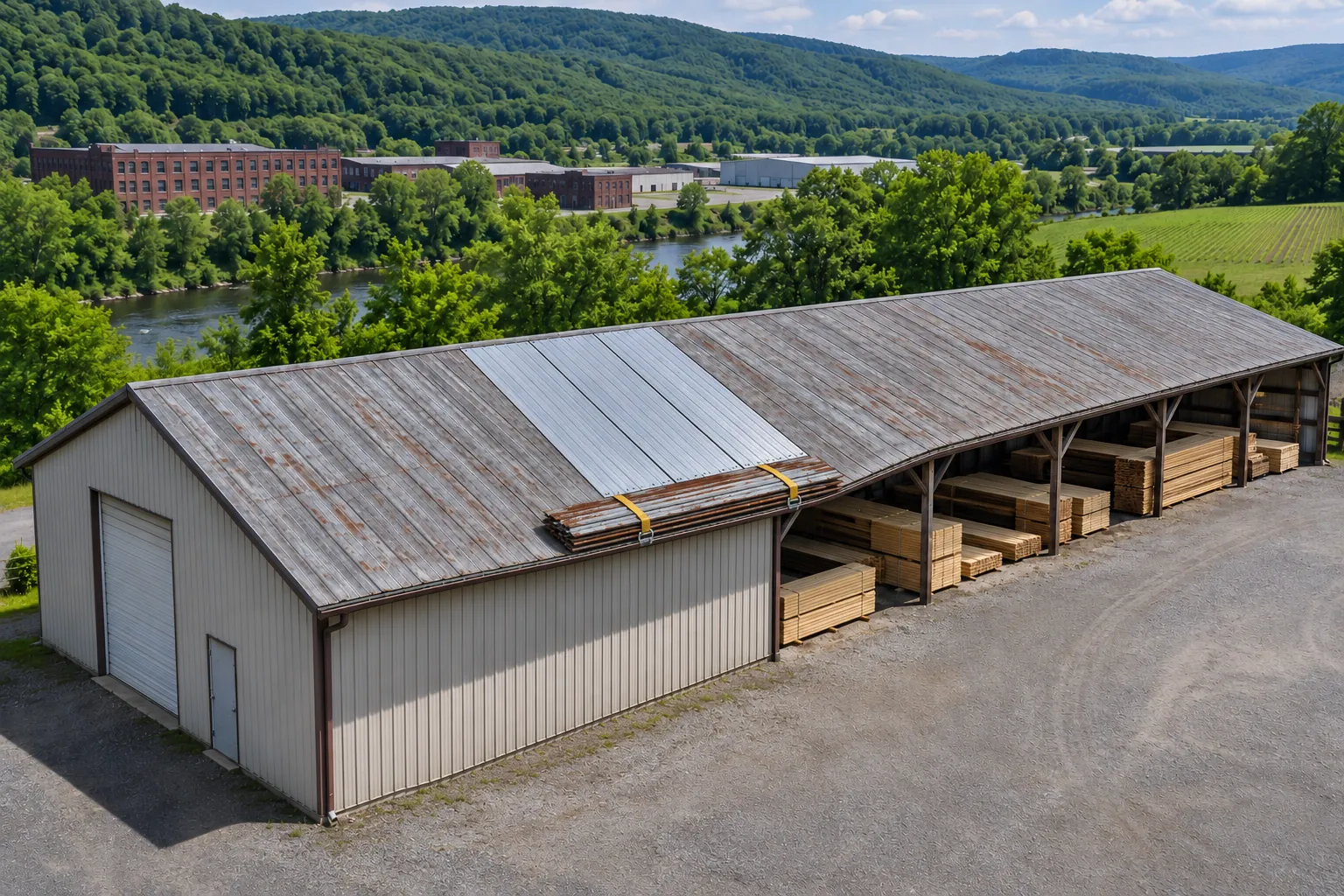
As a Scranton commercial metal roof repair contractor, we replace damaged panels, reset loose screws, reseal laps, and rebuild flashing on metal buildings.
Scranton commercial metal roof repair covers most panel leaks. The columns show where fastener work ends and panel work begins.
Metal roofs leak at their joints and fasteners more than through the panels themselves.
Dented ribs, cracked paint, and a few punctured panels after a storm.
Dents alone seldom leak. Punctures, opened laps, and bent flashing decide which panels get replaced and which stay.
Water at a vent pipe, ridge cap, or where the roof meets a wall.
Panels expand and contract against rigid trim. Failed boots and loose trim get replaced with parts fitted to the panel profile.
Orange streaks running down from lap seams and end joints.
Water trapped between overlapping panels rusts them from the inside. We open questionable laps to see how far it reaches.
Screw heads raised above the panel, some with washers missing.
Wind flutter and thermal movement loosen screws until the holes wallow out. Oversized fasteners restore grip where metal is solid.
Each fix starts by checking the metal around the leak, because new parts need solid steel to grab.
A larger-diameter screw with a fresh washer goes into solid steel; wallowed holes get a patch plate first.
Damaged panels come out to the nearest sound laps, and new panels match the existing rib profile.
Split boots are swapped for ones sized to the pipe and shaped to the ribs, then fastened along their flange.
Cleaned laps get butyl tape and stitch screws so the overlap stays tight through freeze and thaw.
Four failures account for most metal roof calls we get. Each one pairs with a specific repair.
Wallowed holes let rain run along the screw shank into the building.
Oversized screws and new washers restore grip; neighboring screws get checked so the row stays tight.
Corrosion between panels spreads unseen until it eats through the top sheet.
Affected panels are replaced, and new laps get butyl tape and stitch screws.
Sun and cold split rubber boots, opening a gap around the pipe.
A new boot sized to the pipe and shaped to the panel profile goes on with fasteners along its flange.
Large stones crack paint and punch small holes through thin panels.
Punctured panels get replaced in place, and the rest of the roof is checked for opened laps.
Raised screw heads and missing washers usually mean a leak is close behind. Book an inspection before the holes wallow out.
Metal repairs follow five steps from the first screw check to the marked map.
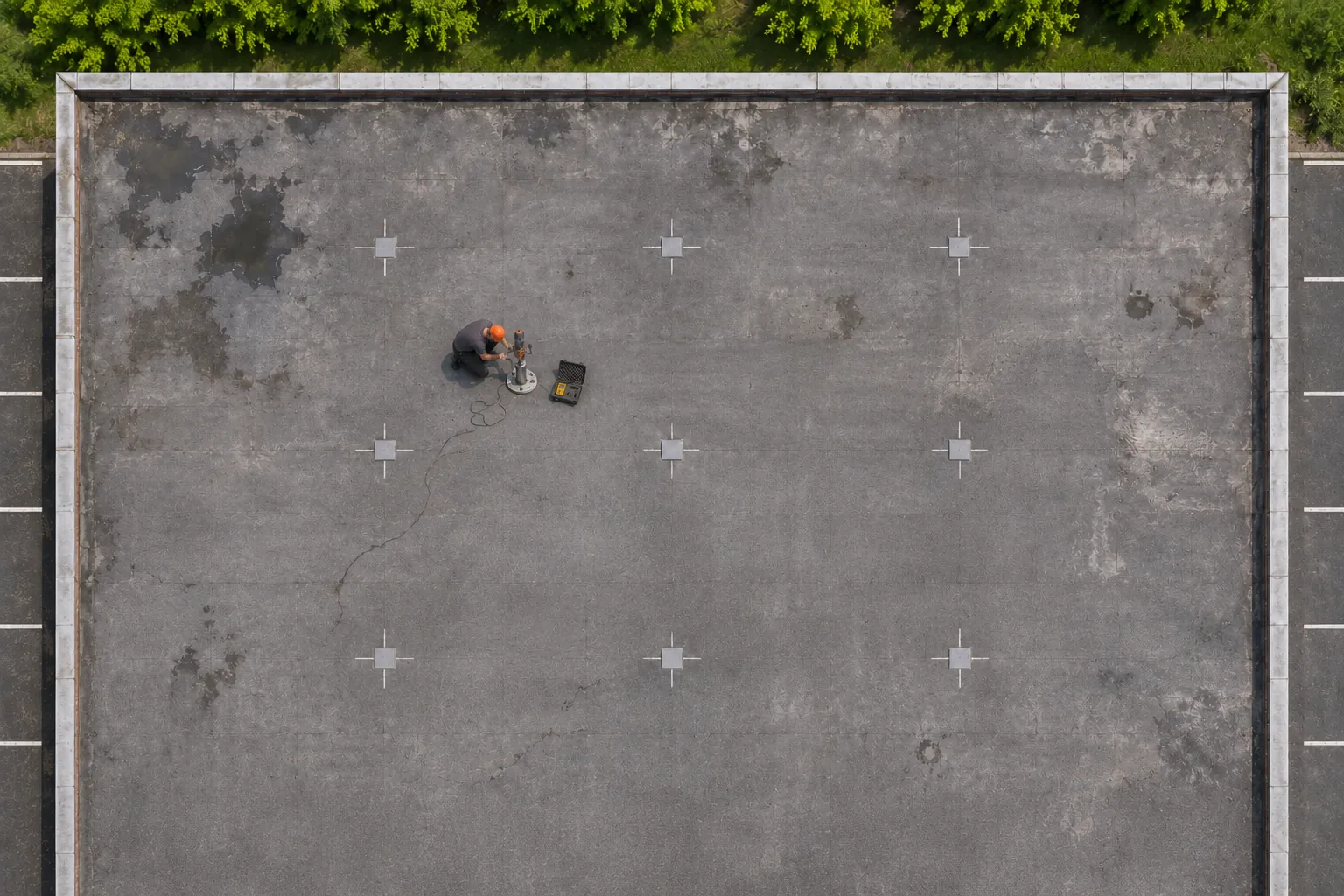
Fastener rows near the leak are tested for grip, and washers are checked for splits or missing rubber.
Old sealant and past repairs come off where needed so hidden corrosion under the lap shows.
Rib height and spacing get measured so replacement panels and boots fit the existing roof.
New panels, trim, and boots go in with fresh fasteners into solid steel.
Photos and a sketch show every panel, screw row, and boot that was changed.
Metal buildings often share roofs with flat sections, plant equipment, or leaks with hidden sources.
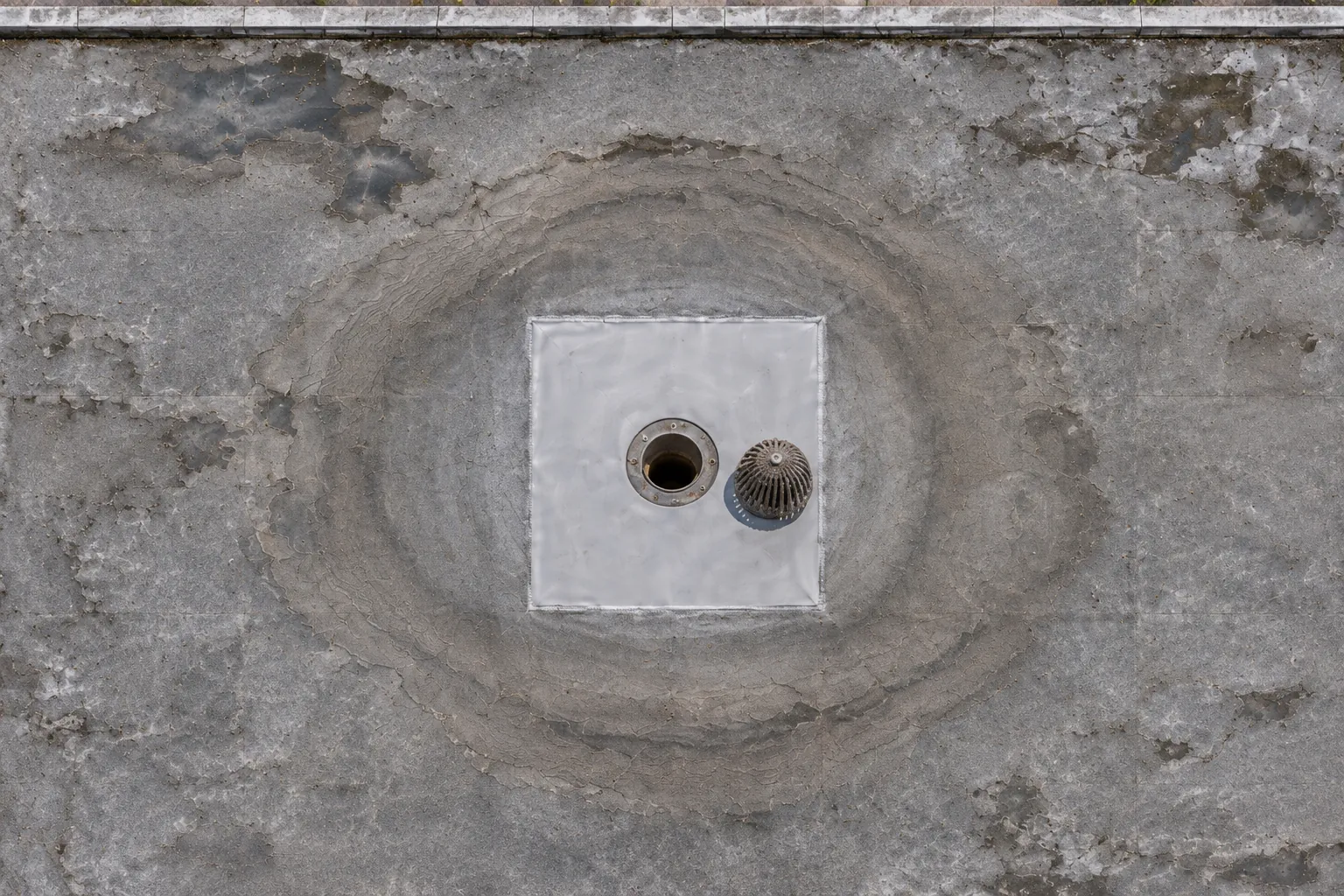
Office additions and low-slope sections beside a metal shop roof bring their own seams and drains to repair.
Where Water Gets In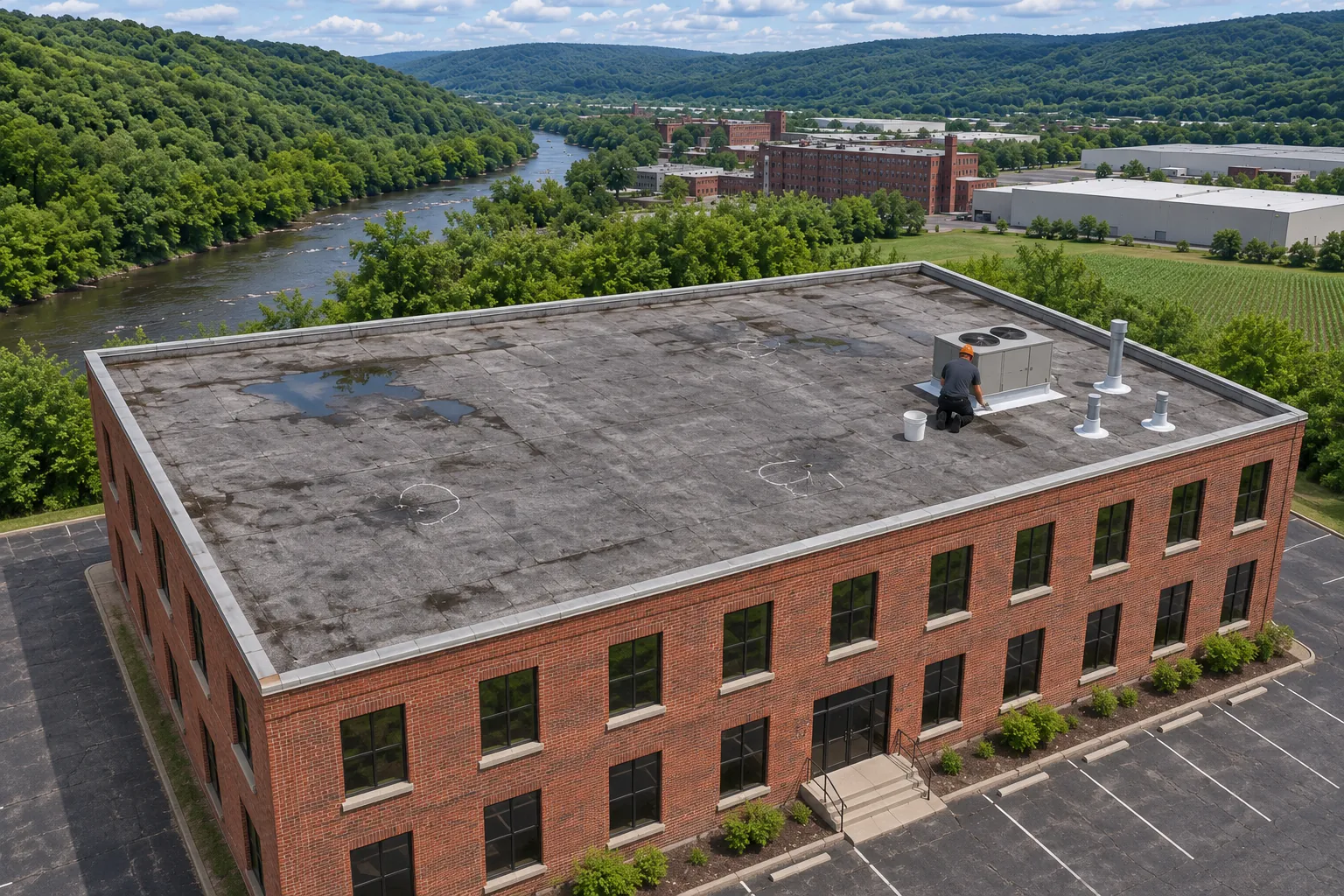
Water that runs along purlins can show up yards from the opening, so tracing comes before any panel swap.
Where Water Gets In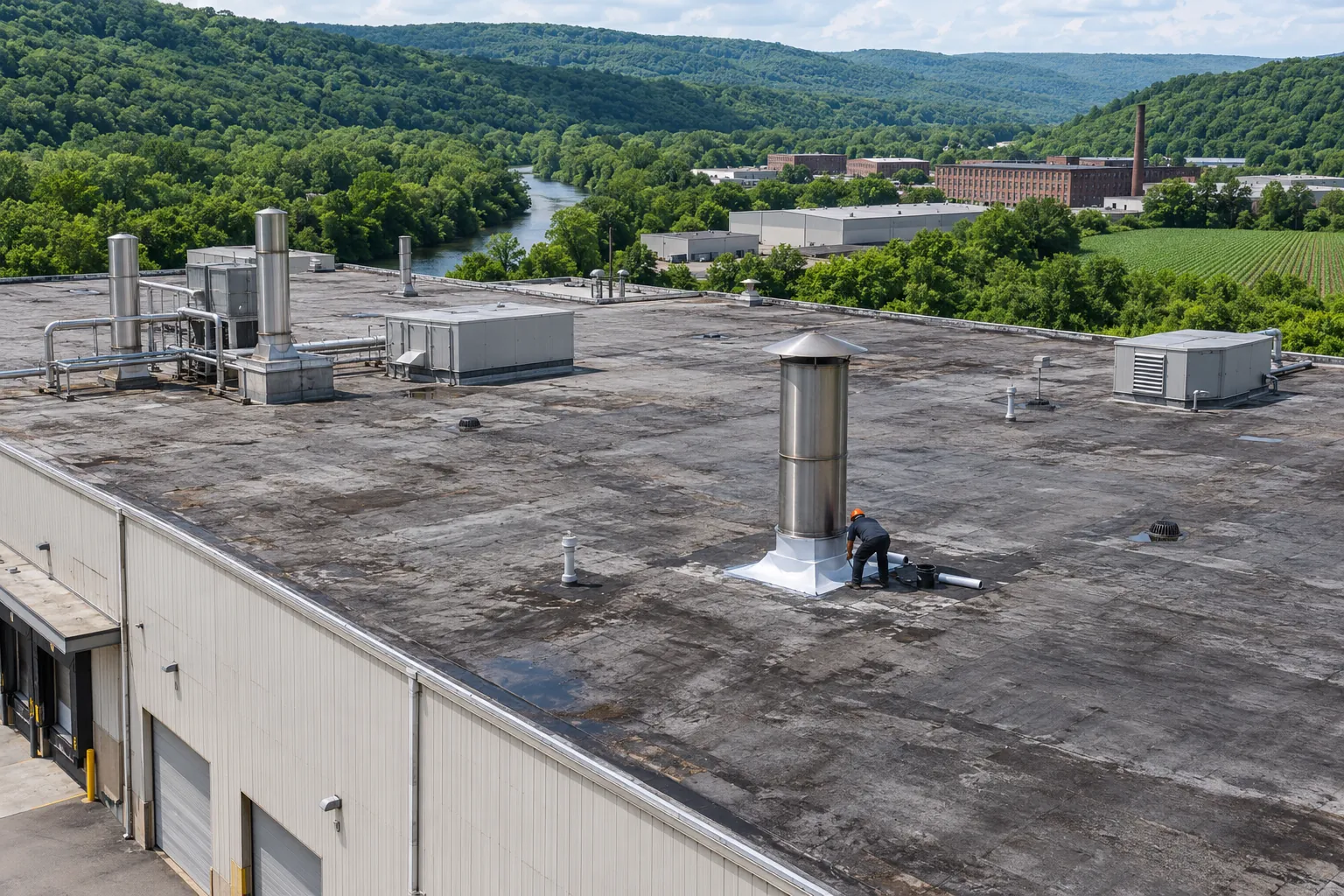
Metal plant roofs with exhaust fans and stacks need curb repairs coordinated with the equipment trade.
Where Water Gets InFasteners top the list. Screws back out, washers crack, and holes wallow until rain follows the shank inside.
Corrosion hidden under laps and poorly fitted pipe flashing come next. Fixing one visible hole says little about the rest of the roof, so neighboring connections get checked too.
Sealant smeared on a failed boot fills the gap for a season, then cracks again. When the boot material, fit, or attachment has failed, a new boot shaped to the panel ribs and fastened along its flange closes the opening for good.
Usually, when the damage is in limited areas and the connections around it are solid. We check punctures, laps, flashing, and attachment. Selected panels get replaced while the rest of the serviceable roof stays.
Old screw holes, corrosion inside laps, and penetration flashing fitted poorly years ago. We look under questionable past repairs and check the connections next to them before writing the scope.
The metal around the hole, the washer, and the purlin or support below all get checked. Solid metal takes a larger screw. Thin or torn metal needs a patch plate or a new panel, because sealing over a moving screw leaves the leak in place.
Tell us where the metal roof leaks and when it started. We inspect the panels, screws, and boots, then quote.