Fits This Service
Fan And Stack Curbs
- Where It Leaks
- Around exhaust fans and stacks
- What Is Below
- Process lines or storage
- Main Concern
- Vibration and residue
- Repair
- Rebuilt curb flashing

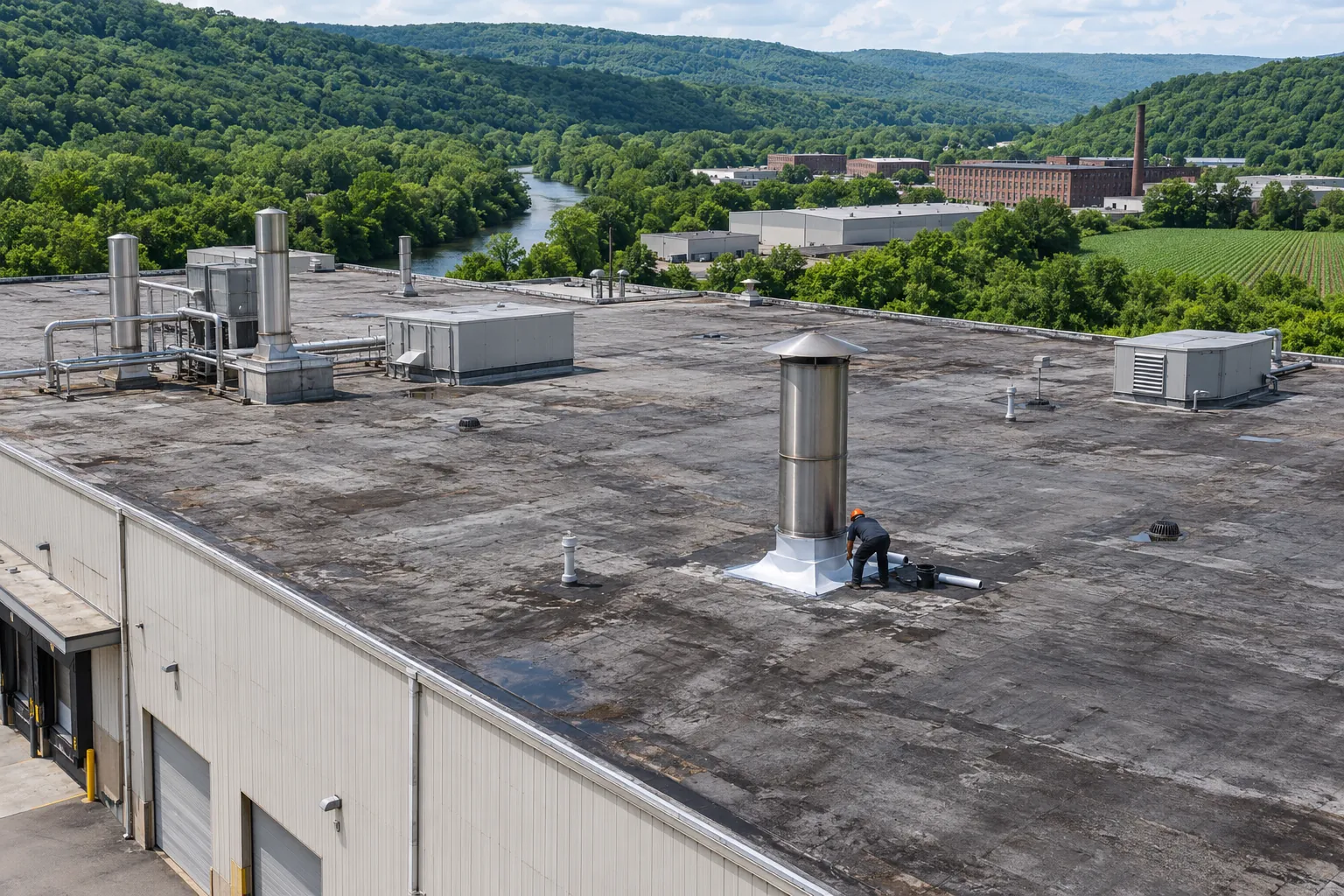
As a Scranton industrial roof repair contractor, we fix drains, fan curbs, stack flashing, and membrane above plants and warehouses that stay running.
Scranton industrial roof repair fits roofs where equipment and production shape the work. The columns show three common cases.
Plant roofs carry loads and traffic that ordinary commercial roofs do not see.
Water at the fan curb, with greasy or stained roofing around it.
Vibration loosens the curb flashing and residue softens some membranes. The fan’s condition gets checked so new flashing is not shaken loose.
Drips onto machinery from a drain fitting overhead.
The fault can sit in the roof flashing, the clamping ring, or the pipe below. Each gets checked before anything is opened.
Punctures and scuffs between the roof hatch and equipment.
Frequent service trips wear through membrane. Patches and walkway pads protect the paths trades use most.
Leaks at stacks that vent hot process air.
Heat and movement crack rigid flashing collars. Replacement collars allow for expansion at the stack.
Industrial repairs depend on what happens below the roof as much as what is on top of it.
Openings are sized and timed to the sensitivity of work below, with protection set before removal begins.
Hoisting points and rooftop paths are planned so materials never cross over active lines.
When a drain leak starts in the pipe, the plumbing trade is brought in alongside the roof repair.
Repairs at a shaking fan get timed with its servicing so new flashing meets a balanced unit.
Industrial repairs answer failures driven by equipment, heat, and traffic.
Fan vibration cracks and loosens flashing at the curb until water runs inside.
Curb flashing is rebuilt, and the fan is flagged for servicing when it runs out of balance.
A failed drain connection drips onto equipment and stops production.
Protection goes in below, the drain flashing and clamp are rebuilt, and pipe faults go to the plumber.
Hot exhaust cracks rigid collars and dries out nearby roofing.
New collars allow for movement, and heat-worn membrane around them is replaced.
Leaks show up yards from the opening because water runs inside the roof assembly.
Core cuts trace the water path, and the repair follows the wet boundary found.
Cover the equipment and call us. We plan protection below before opening anything above it.
Industrial repairs add planning steps for the people and equipment below.
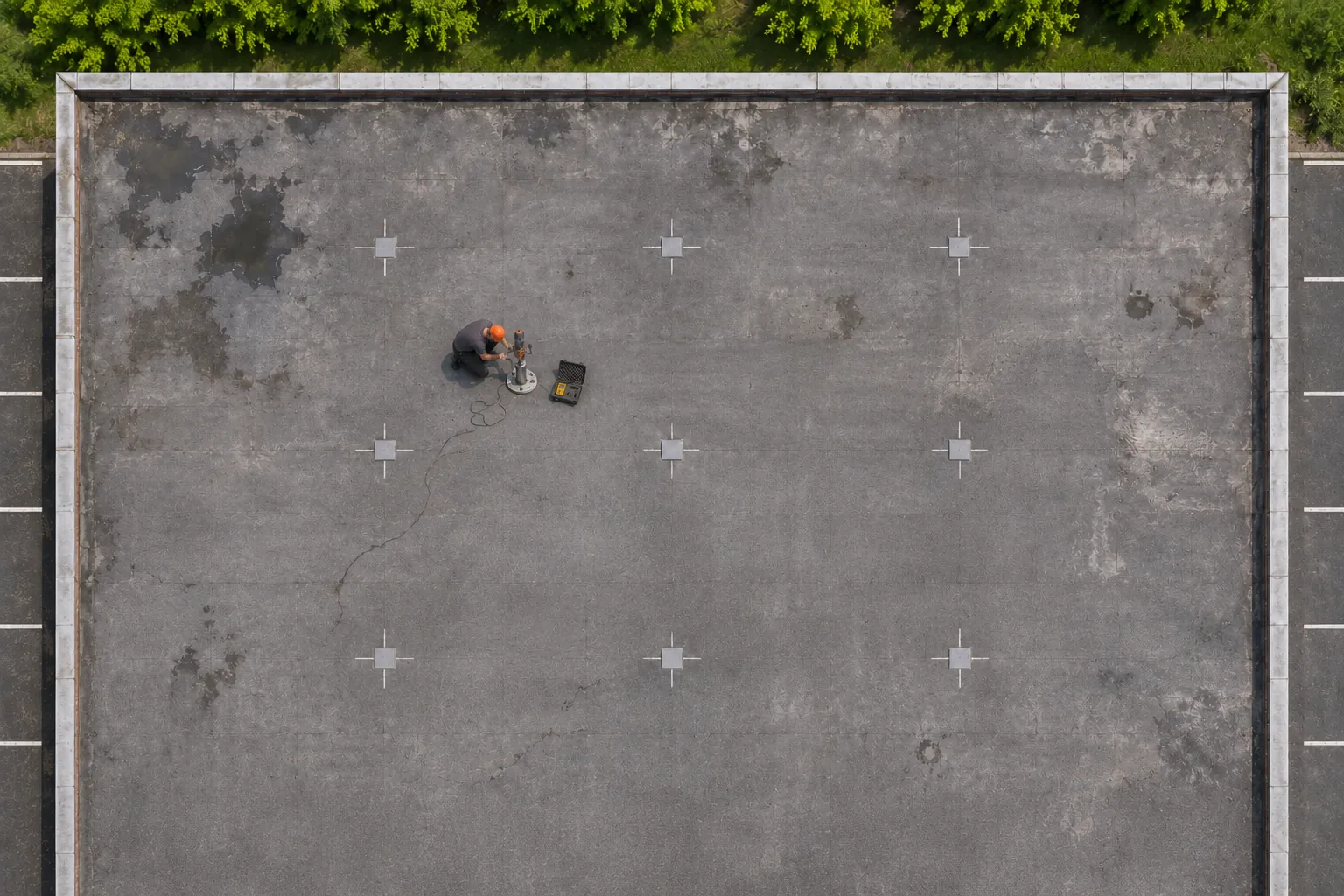
Production areas, sensitive equipment, and shift times under the roof shape every later step.
Fan curbs, stacks, drains, and service penetrations get checked along with the membrane.
Covers, isolation windows, and material routes are set before any roofing comes off.
Each opening is closed before the crew leaves the roof, with wet insulation replaced.
A sketch and photos show each curb, drain, and section repaired, plus anything for other trades.
Plant roofs often combine membrane fields, metal sections, and leaks that need tracing.
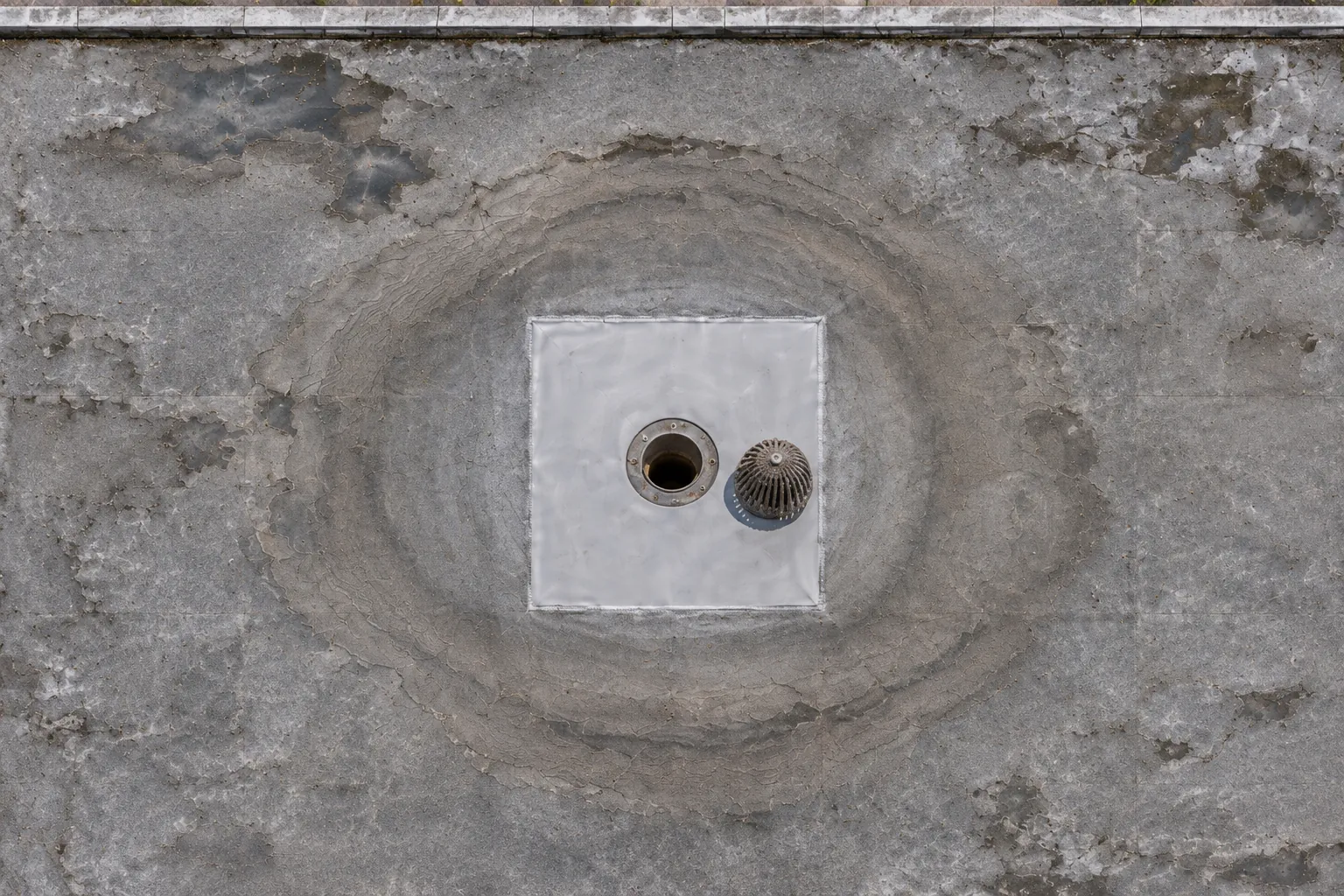
Large membrane fields between equipment need seam and blister repairs like any flat roof.
Where Water Gets In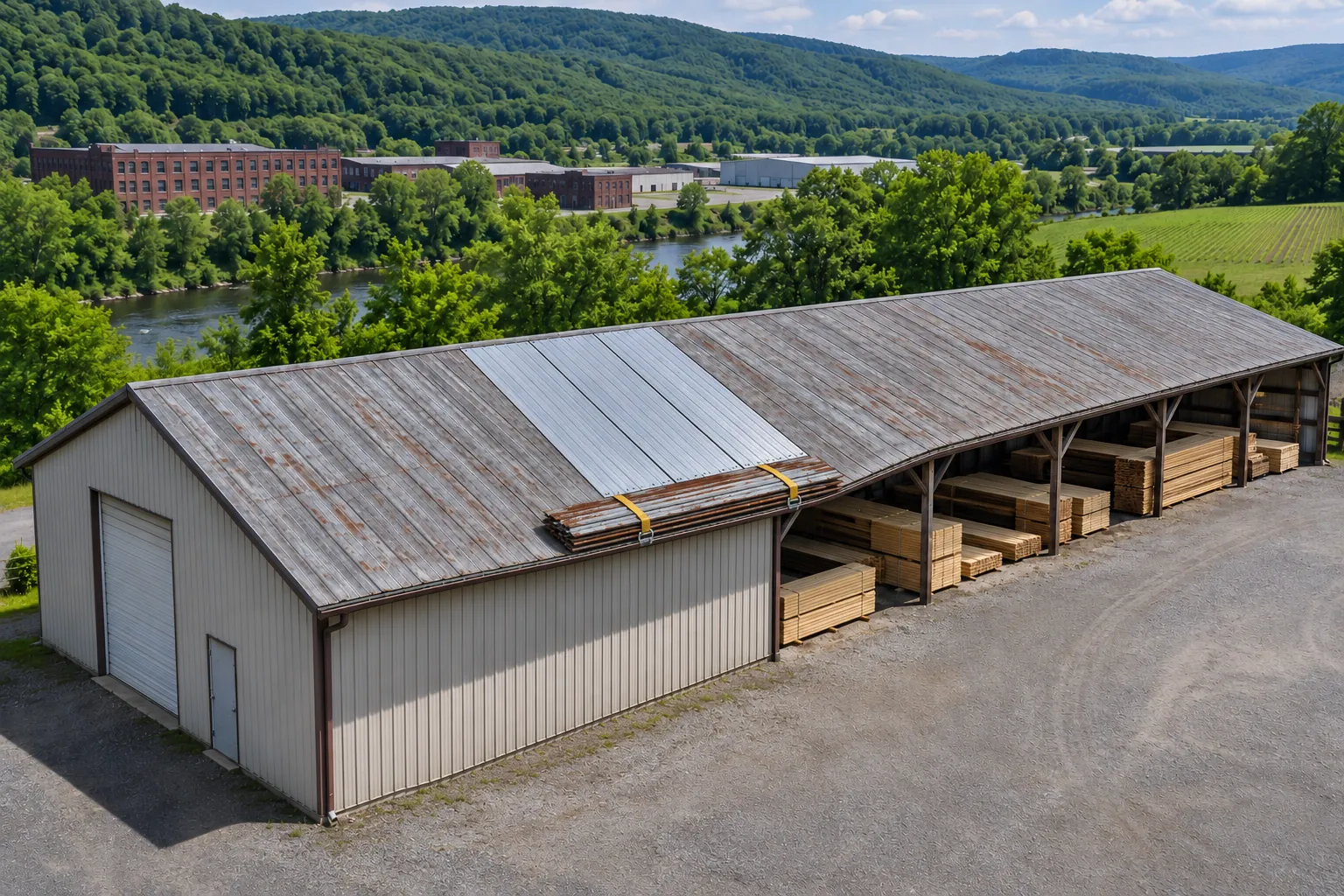
Metal additions and storage sheds on plant grounds bring screw and lap repairs.
Where Water Gets In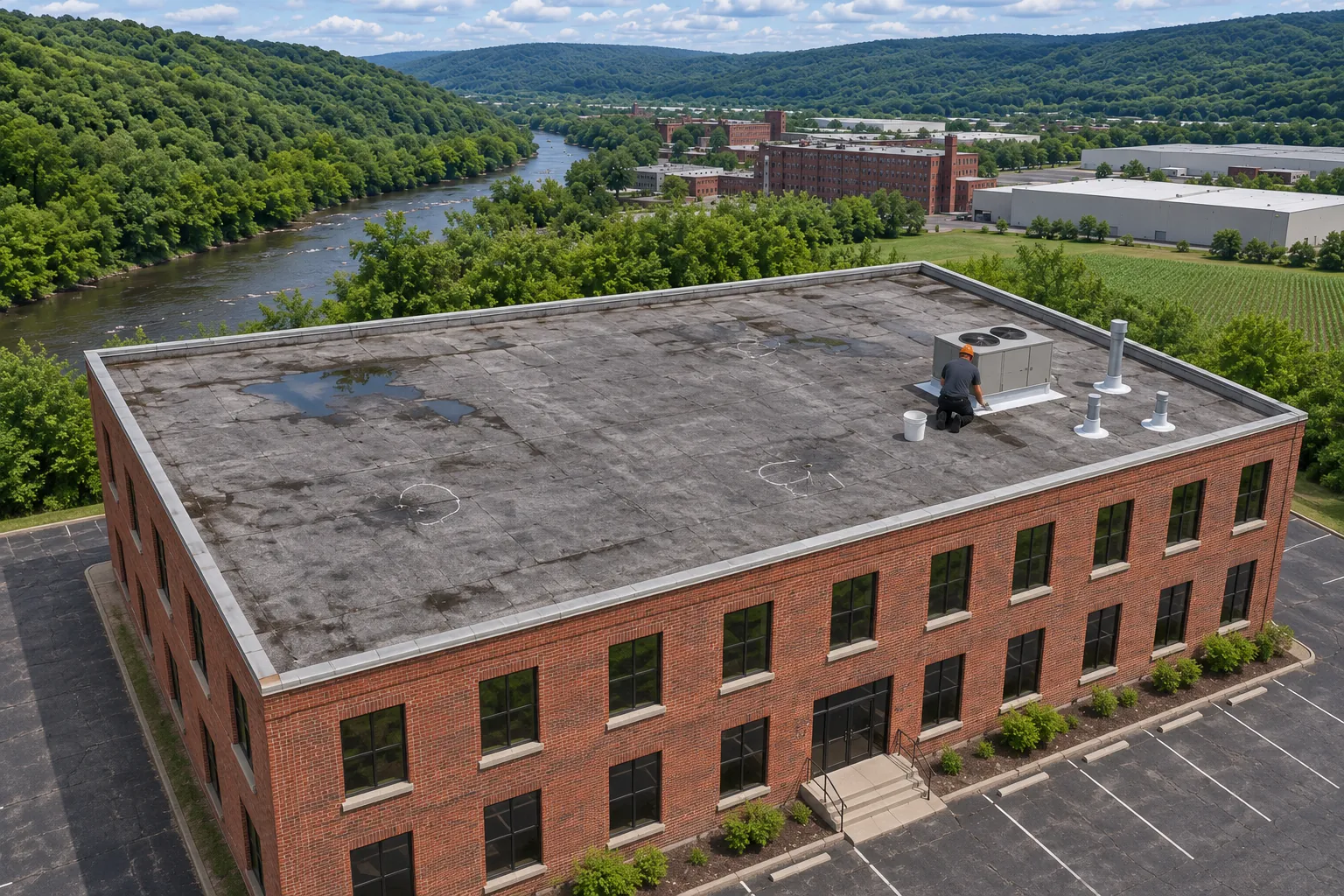
When drips land far from any equipment, the water path gets traced before roofing is opened.
Where Water Gets InTracing comes first, because water travels inside the roof assembly before it drips. We compare roof features, moisture readings, and equipment sources.
The repair follows the diagnosed route and the edge of the wet materials, with protection and timing planned around the work below.
Separation depends on how much the roof is opened and how sensitive the work below is. Protection, material routes, and isolation windows get set before removal starts, and the sequence lists those limits in writing.
The drain fault, access needs, and protection below get set before opening the roof. We inspect roofing attachment and the outlet together and coordinate a plumbing check when the pipe is involved.
Yes. Water moves along the deck and through insulation, so the damage inside can sit well away from the opening. We follow the evidence on the roof before choosing repair locations.
A shaking fan stresses its curb and flashing every hour it runs. New roofing at that curb lasts longer when the fan gets serviced at the same time, so we time the two together.
Yes, wherever trades walk the same path every week. Pads spread boot and tool loads, keep punctures off the membrane, and show visiting technicians where to walk between the hatch, fans, and units.
Tell us what runs under the leak and on the roof above it. We plan the repair around production.