Fits This Service
Patch And Reflash
- What You See
- A split seam or one punctured spot
- Insulation Below
- Dry when cored
- Repair Method
- Weld or adhere a new cover piece
- Next Step
- Watch it after the next storm

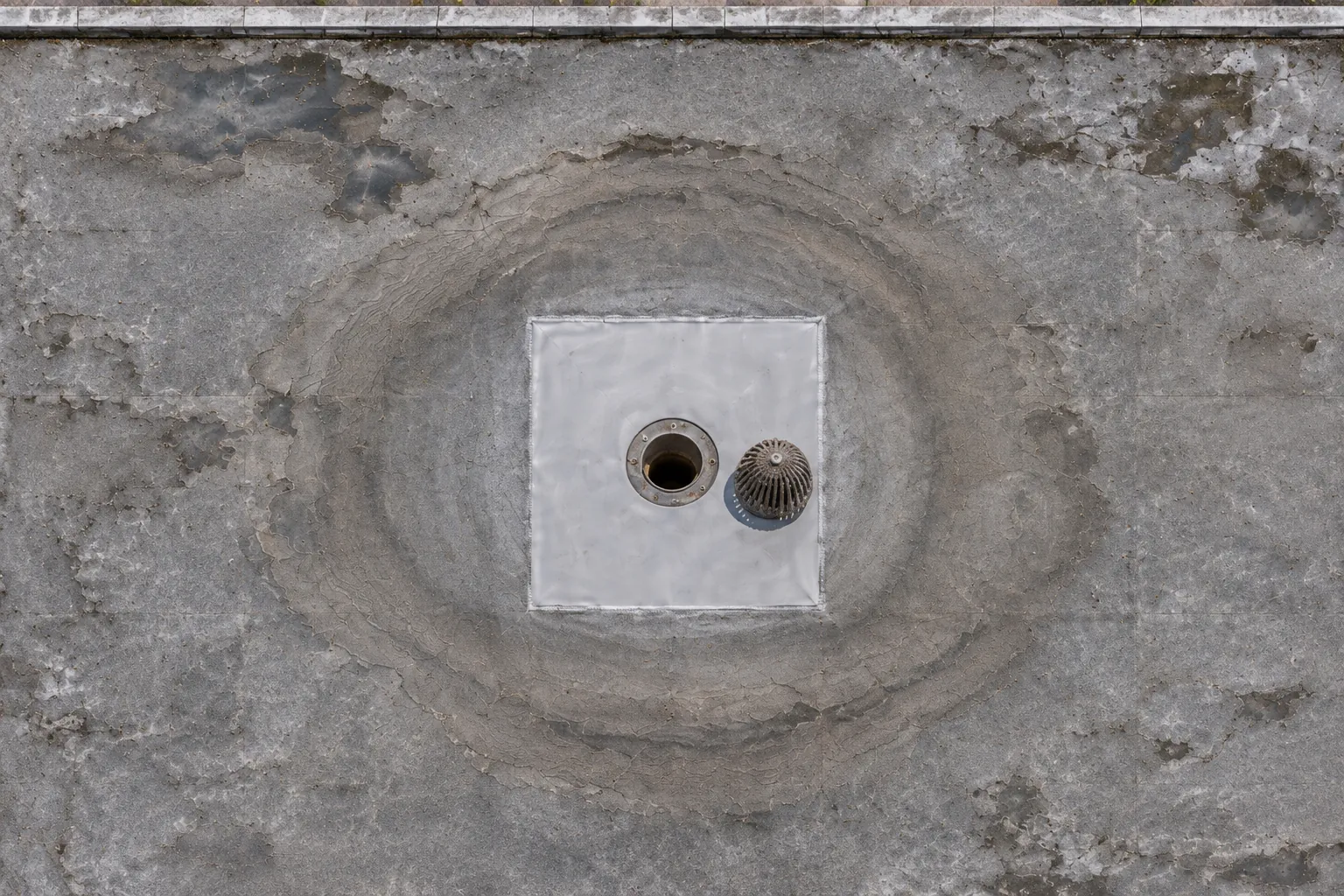
As a Scranton flat roof repair contractor, we fix membrane seams, blisters, drains, and low spots on commercial roofs, then tie each repair into dry roofing.
Scranton flat roof repair fits most low-slope leaks. These columns show when a patch holds and when the roof needs more.
Low-slope roofs here fail in four common ways, and each one has its own cause.
Raised bubbles in the membrane, worst along the path to rooftop units.
Trapped air or moisture lifts the layers. Blisters on walkways get cut, dried, and patched because boots split them open.
Dark rings and puddles still sitting two days after rain stops.
Settled insulation or a drain set too high holds water against seams. The fix happens at the drain and in the insulation shape.
Lap edges curling up along the field of a TPO or EPDM roof.
Water in a loose lap freezes and pries it wider. New cover strips go over cleaned, primed membrane on both sides.
Cracked, crazed asphalt surface with bare felts showing near the edges.
Old built-up roofs dry out and crack. Core cuts show whether a patch will hold or the area needs a new membrane.
The material decides the method, so the roof system gets confirmed before any patch is cut.
Hot air fuses a new TPO piece to cleaned membrane, and each weld gets probed along its edge.
Primed rubber takes seam tape and a cover strip, rolled flat so no channel is left for water.
Cut-out areas get matching plies set in compatible adhesive, with granules or coating over the top.
Insulation around a high drain is cut back and replaced with tapered boards so water runs to the bowl.
Each repair answers one failure on the roof. Here is what goes wrong and what we do about it.
Ponded water sits on seams and soaks through any small opening it finds.
Raising low areas with tapered fill or lowering the drain sends water to the outlet within hours.
Foot traffic splits raised membrane, opening a direct path into the insulation.
We cut the blister, dry the area, patch it, and add walkway pads where boots cross most.
Freeze cycles pry loose seams wider every winter until rain runs under them.
Cleaned, primed laps get new cover strips that extend onto firm membrane on both sides.
Wet boards under a dry-looking membrane keep feeding water to the ceiling.
Core cuts find the wet area, and the soaked boards come out before the roof is closed up.
Take a photo of the puddles after rain stops and call us. We check the drain height and the insulation underneath.
Five steps take a flat roof from a leak report to a finished, marked repair.
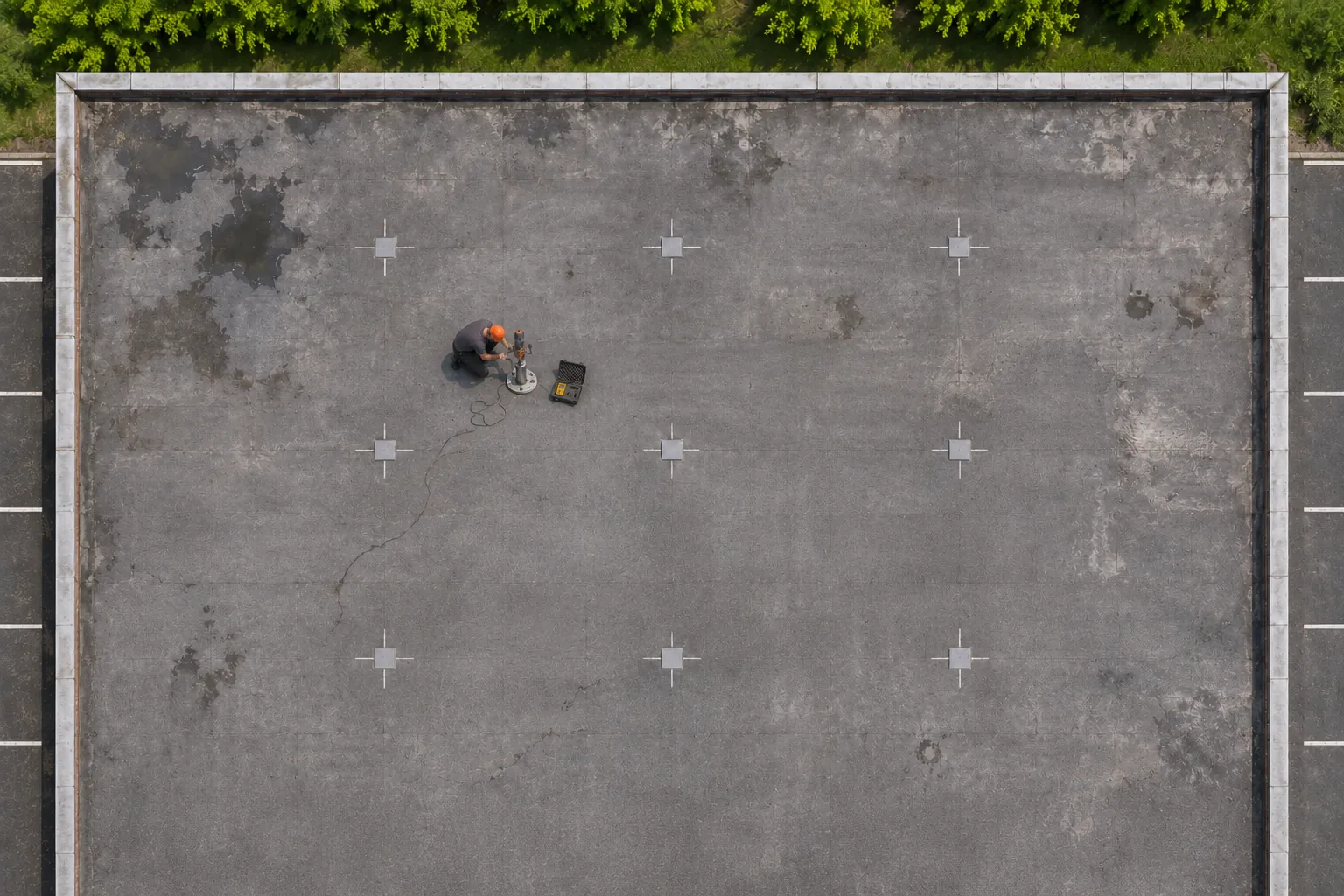
TPO, EPDM, built-up, and modified bitumen each need their own repair materials, so the system is confirmed first.
Lap edges get probed by hand, and drains are checked for height, clamping rings, and debris in the strainer.
Small cores near the leak show how far moisture spread through the insulation under the membrane.
Repairs extend onto dry, firm membrane, and wet boards are replaced before the roof is sealed again.
Each patch, drain, and wet area found goes on a roof sketch with photos for your records.
Flat roofs often carry metal canopies, traced leaks, or plant equipment that call for a related repair.
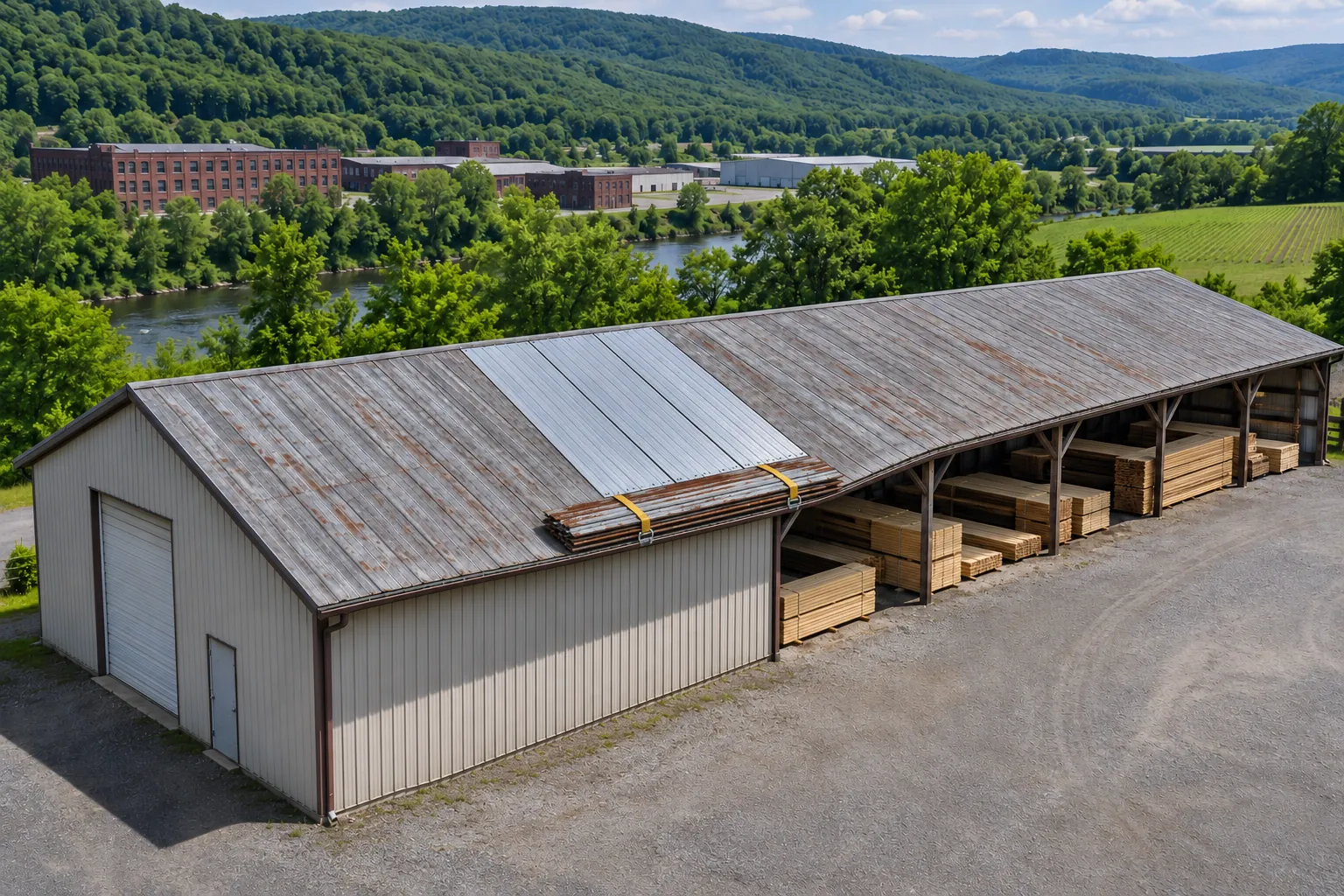
Metal canopies and penthouse roofs often sit beside a flat roof and leak at their own screws and laps.
Where Water Gets In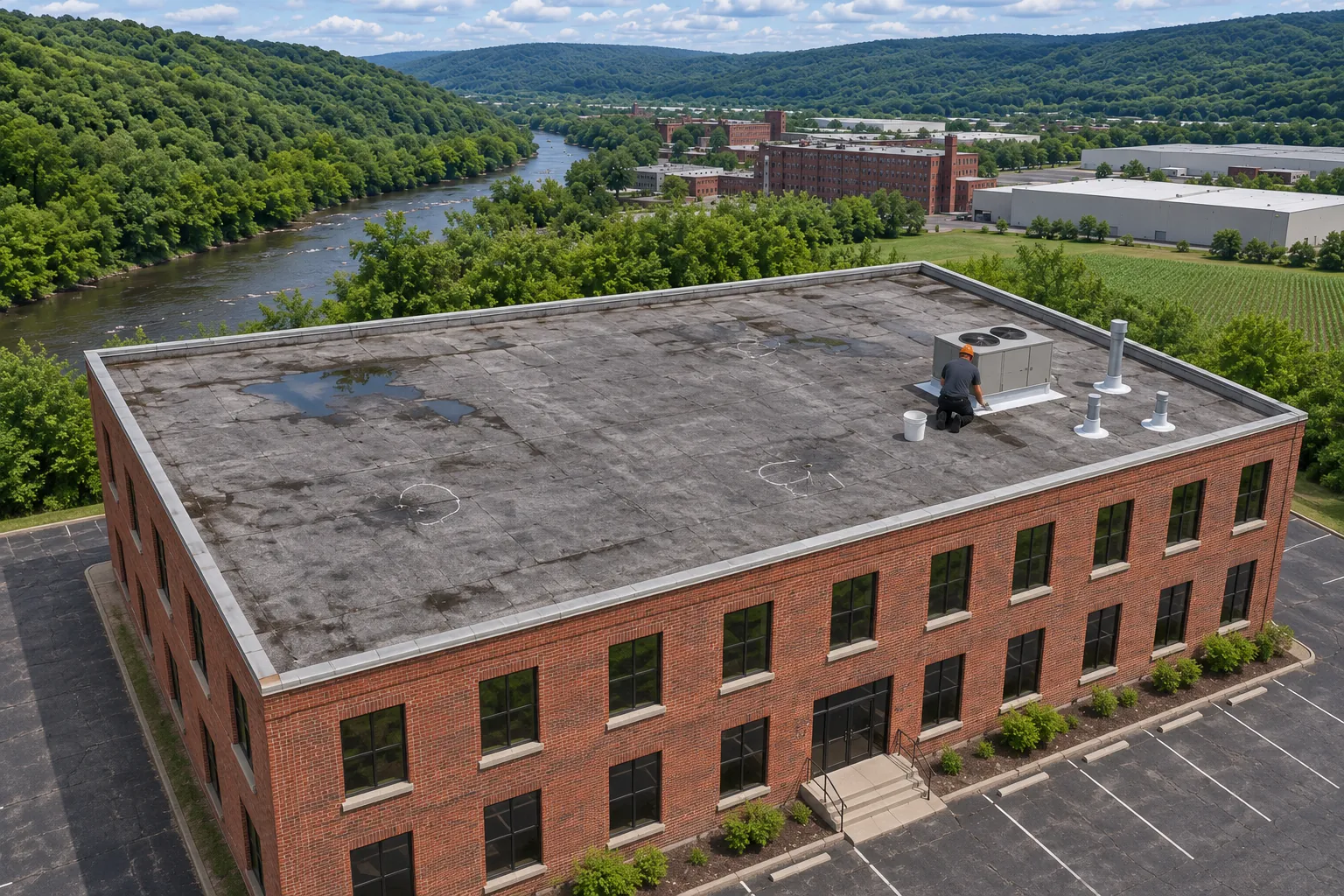
When the drip is far from any seam or drain, tracing the water across the deck comes before the patch.
Where Water Gets In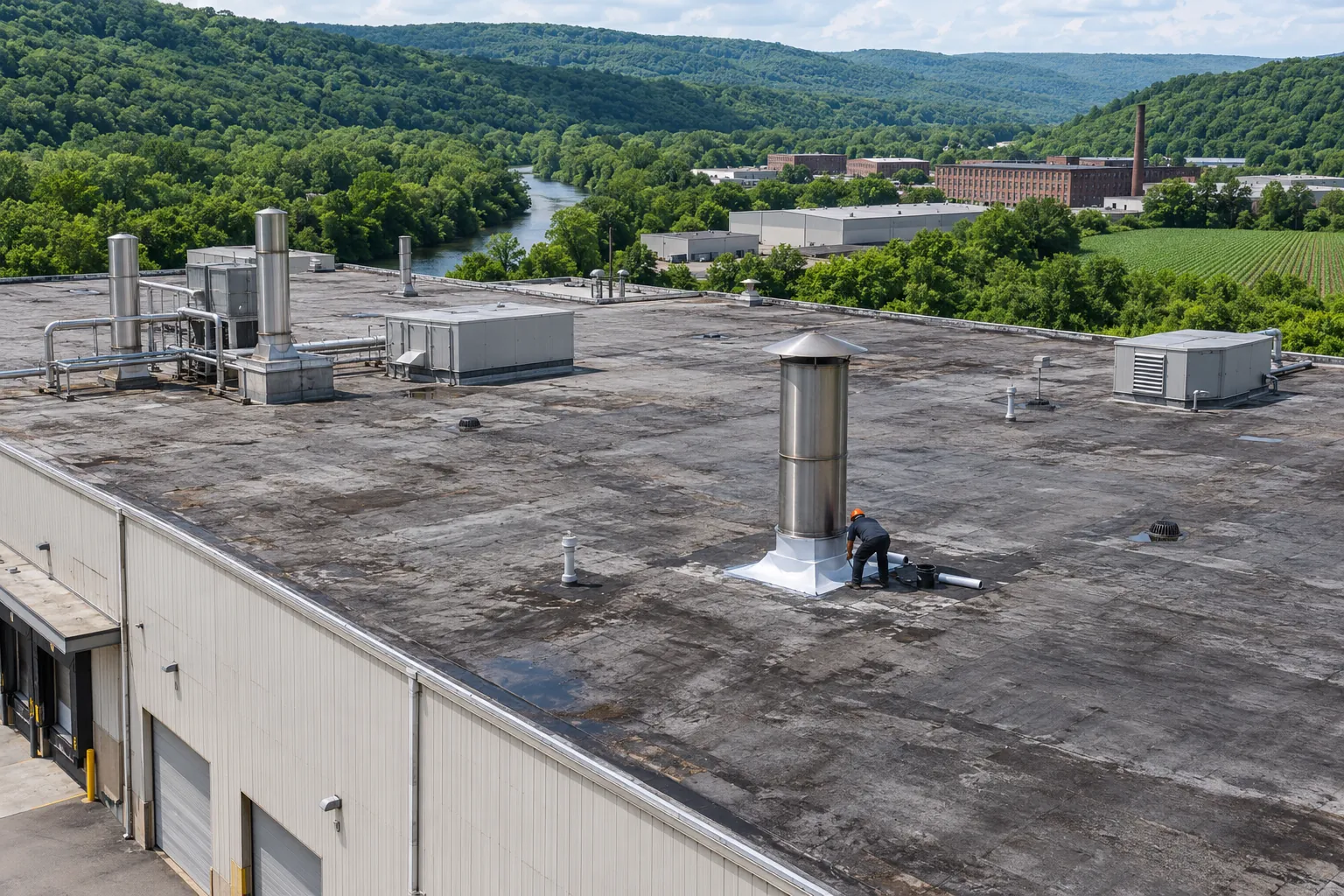
Flat plant roofs crowded with fans and stacks need repairs staged around the work happening underneath.
Where Water Gets InHeavy rain fills the roof faster than a partly blocked drain can empty it. Rising water reaches weak seams and flashing that stay dry in a light shower.
We follow the drainage path, check low areas, and connect the roof conditions to where water shows up inside, because the entry is often away from the drip.
Ice, wet membrane, and cold temperatures limit which materials will bond or cure. We check safe access first. A temporary seal can hold until the roof warms and dries, and the paperwork notes which permanent work is still waiting.
Yes, location matters. A blister on a service path splits under foot traffic, while one in an open field can stay stable for a while. We identify the roof system, check for splitting and moisture, and plan the patch before cutting anything.
Often it does. Sagging insulation, a low deck, or a drain set too high causes the ponding. A surface patch closes a hole, while tapered fill or a lowered drain changes the shape that keeps collecting water.
Patching over wet boards traps the water and lets it keep spreading. We core the area, remove soaked insulation, and replace it before the new membrane goes on, so the repair has a dry base.
Send a photo of the ponding or the split seam. We inspect the roof and quote the repair.