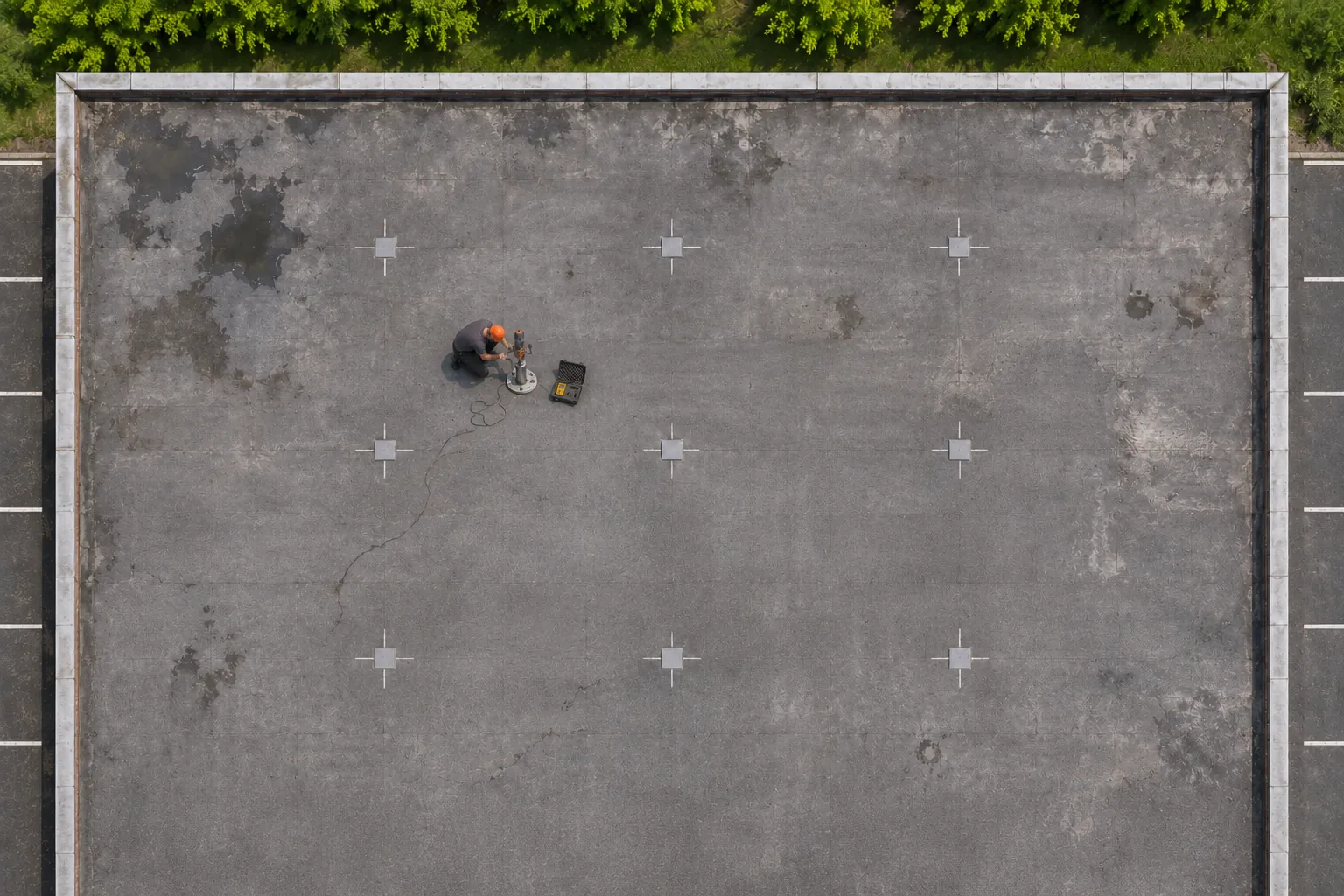
Top-down view of a flat roof marked with a core-cut grid and a roofer taking a core sample
Four Repair Services

Commercial Roof Repair Services in Scranton

Flat, Metal, Leak, And Industrial Repairs Matched To Each Roof

We offer commercial roof repair services in Scranton for flat, metal, leaking, and industrial roofs, each one starting with an inspection on the roof.

Four Repair Services

Our Four Repair Services

Pick the commercial roof repair services in Scranton that match your roof. Each card lists where water most often gets in on that kind of roof.

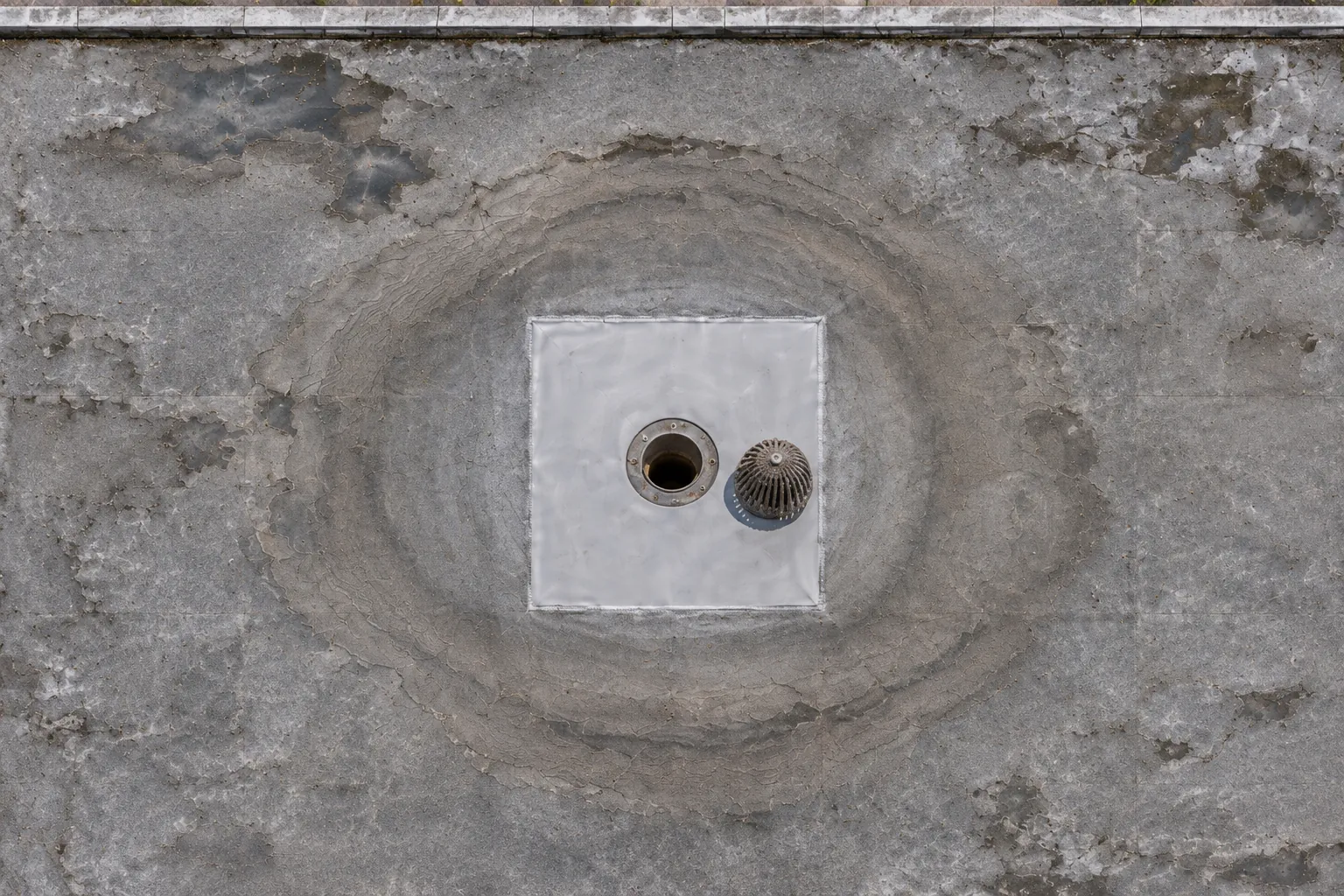
Top-down view of a new white membrane square flashed around a roof drain inside old ponding rings

Flat Roof Repair

Low-slope membrane, built-up, and modified bitumen roofs on offices, schools, and storage buildings, where ponding, blisters, and split seams cause most leaks.

Where Water Gets In
  • Low spots that hold rain for days
  • Lap seams opened by freeze cycles
  • Drain bowls sitting above the roof
See flat roof repair
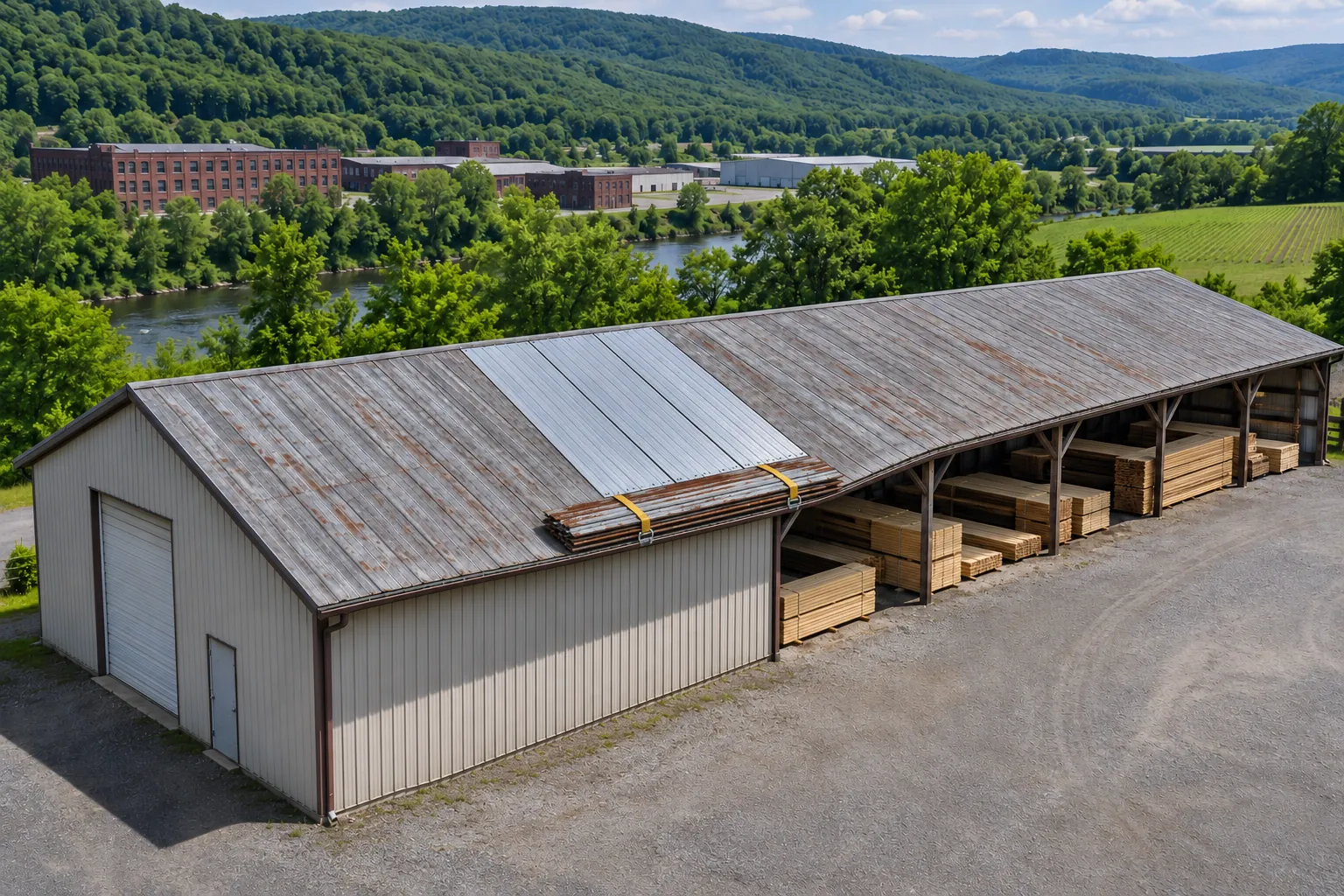
Metal storage building with a run of new bright panels set into a weathered metal roof

Commercial Metal Roof Repair

Exposed-fastener and standing-seam metal roofs on shops, barns, and maintenance buildings, from single panel swaps to rebuilt flashing at pipes and ridges.

Where Water Gets In
  • Screws with cracked or missing washers
  • Rust working under panel laps
  • Pipe boots split by sun and cold
See metal roof repair
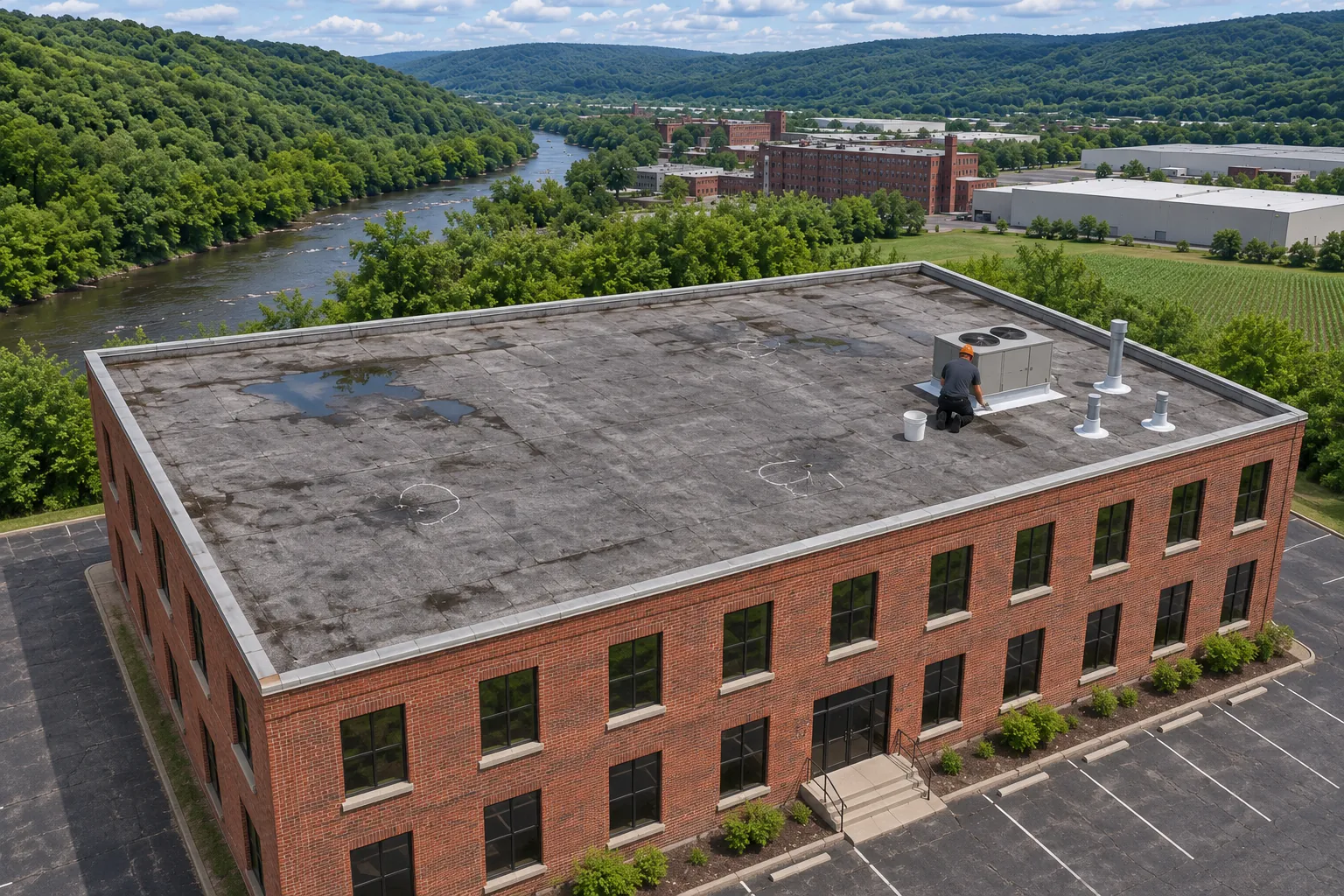
Roofer kneeling at a rooftop unit on a brick building, with marked points around the roof penetrations

Commercial Roof Leak Repair

Leaks with an unclear source, traced from the ceiling back to the roof through drains, parapets, penetrations, and wall connections.

Where Water Gets In
  • Coping joints above wall flashing
  • Penetrations around rooftop units
  • Edges blocked by ice and debris
See leak repair
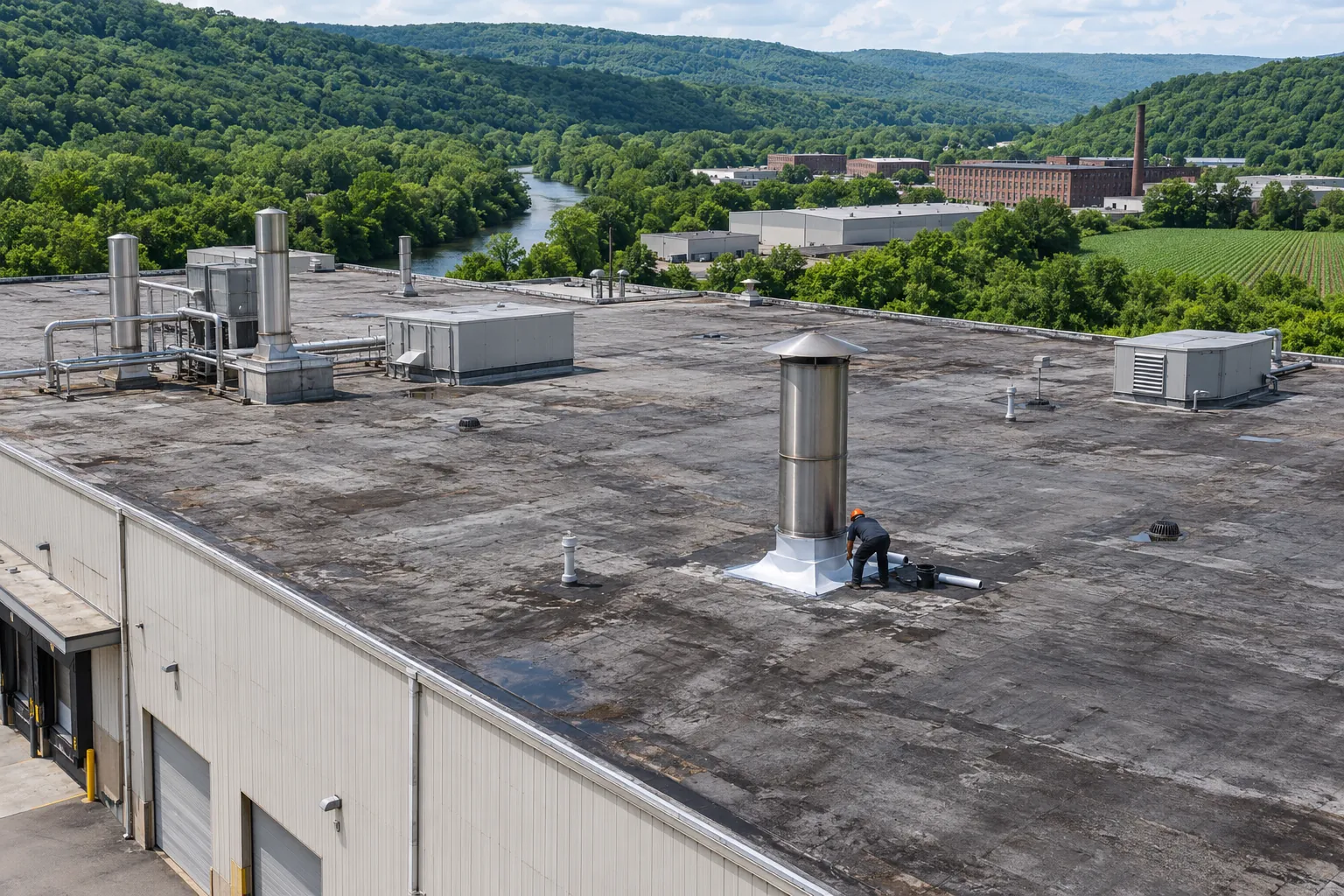
Roofer sealing fresh flashing at the base of an exhaust stack on a large industrial roof

Industrial Roof Repair

Plant and warehouse roofs with drains above machinery, exhaust fans, and stacks, where roofing work has to be separated from production below.

Where Water Gets In
  • Fan curbs shaken loose by vibration
  • Drains over machinery and pipe runs
  • Stack flashing near hot exhaust
See industrial roof repair
Which Repair Fits

Choosing Commercial Roof Repair Services in Scranton

Three common starting points, with the roof details that decide which repair crew and materials come out first.

Most Calls Start Here

A Stain With No Clear Source

What You Notice
A drip far from any roof feature
Roof Type
Any low-slope or metal roof
First Thing Checked
Drains, curbs, and parapet caps
Usual Repair
Leak repair at the traced entry

Water Standing After Rain

What You Notice
Rings and puddles two days later
Roof Type
Membrane or built-up roof
First Thing Checked
Drain height and insulation shape
Usual Repair
Flat roof repair with tapered fill

Loose Or Rusted Panels

What You Notice
Rattling, rust streaks, or lifted laps
Roof Type
Metal panel roof
First Thing Checked
Washers, screws, and lap corrosion
Usual Repair
Panel and fastener repair

Not Sure Which Repair You Need?

Describe the stain, the roof type, and any equipment above it. The inspection sorts out which repair fits before anything gets quoted.

How A Repair Runs

How Every Repair Service Starts

Each service shares the same opening steps, so the repair matches the roof before work starts.

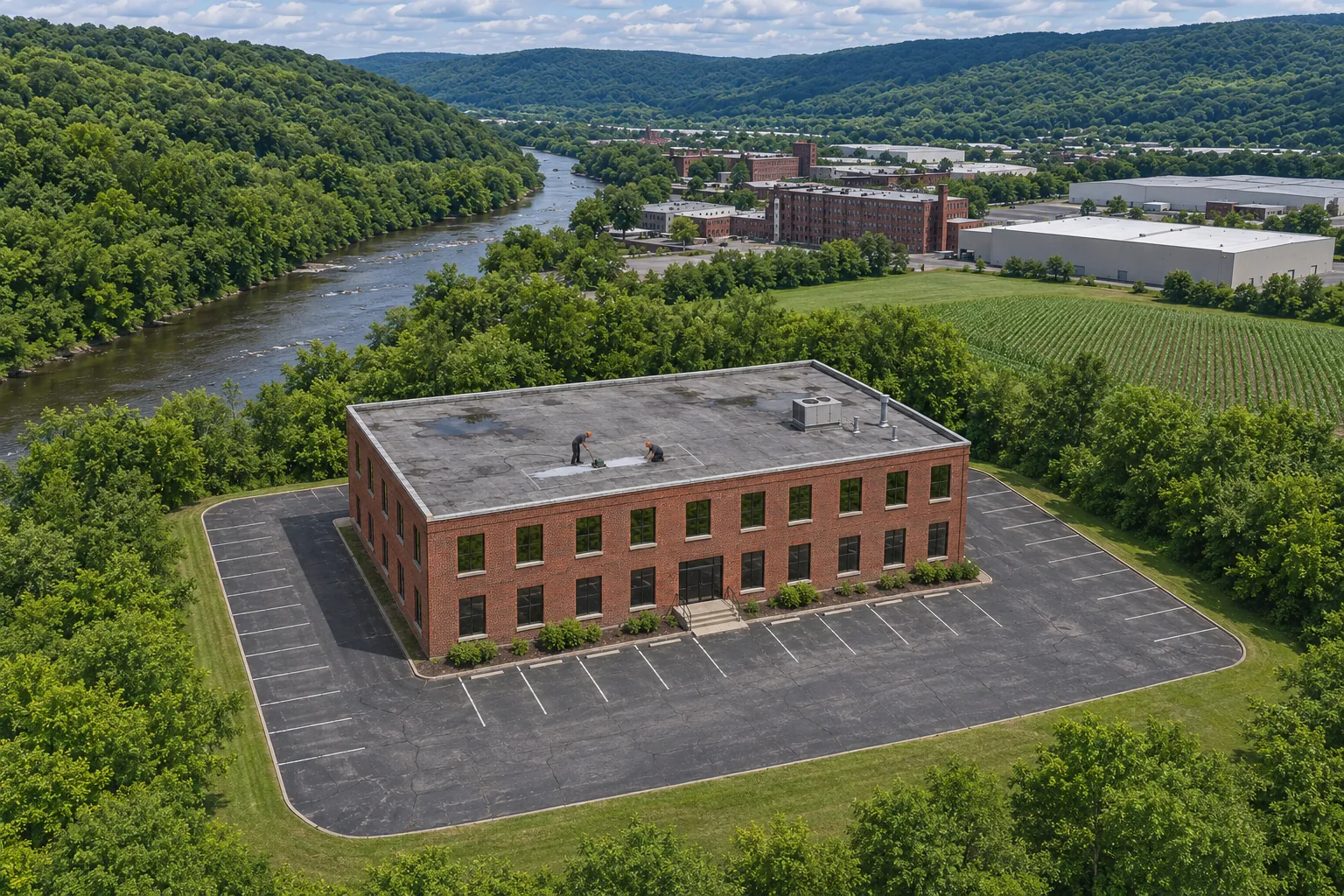
Two roofers working on the flat roof of a two-story brick office building above a river valley in Scranton, PA
  1. 1

    Collect Leak Details

    Dates, weather, and drip locations from staff narrow down which roof areas to walk first.

  2. 2

    Inspect The Roof Area

    Membrane, panels, flashing, and drains near the reported leak are checked by hand and by eye.

  3. 3

    Confirm The Roof System

    Knowing the membrane or panel type decides which patch, weld, or fastener the repair needs.

  4. 4

    Quote The Repair

    A written scope names each repair location, the materials planned for it, and any wet insulation found during the visit.

  5. 5

    Schedule Around The Building

    Repair days are set around tenants, shifts, and deliveries, with roof access and material hoisting planned in advance.

What We Find

Conditions These Services Repair

Four conditions show up across every service, each with a different cause behind it.

  • Sun

    Chalked And Cracked Membrane

    You See

    Surface crazing and gray chalk on older membrane near the parapets.

    What It Means

    Ultraviolet wear thins the top layer, so seams near the cracking get tested before patches go on.

  • Foot Traffic

    Worn Paths To Rooftop Units

    You See

    Scuffed, punctured roofing between the hatch and the equipment.

    What It Means

    Service visits wear a path; walkway pads and patched punctures stop the next tear.

  • Wind

    Lifted Edge Metal

    You See

    Edge metal raised or bent along one side of the building.

    What It Means

    Wind gets under loose edges and peels membrane back, so fasteners and edge strips are reset.

  • Equipment

    Grease And Exhaust Residue

    You See

    Dark staining and soft roofing around kitchen or process exhaust.

    What It Means

    Residue softens some membranes, so the stained area is cleaned and cut out before patching.

  • Hail

    Bruised Membrane And Dented Panels

    You See

    Pockmarked membrane and dented metal after a summer hailstorm.

    What It Means

    Punctures and cracked laps leak while dents seldom do, so each damaged spot is probed before it goes on the scope.

  • Freeze

    Seams Pried Open By Ice

    You See

    Curled laps near drains and edges after a hard winter.

    What It Means

    Water frozen inside a loose lap widens it each season, so the lap is cleaned, primed, and covered with a new strip.

Questions

Questions About Our Repair Services

Asked Most

Which repair service do I need for my building?

Start from what you see. Standing water and split seams point to flat roof repair, loose screws and rust to metal roof repair, and a stain with no clear source to leak repair. Plant roofs with heavy equipment usually fall under industrial roof repair. The inspection confirms the choice before a quote.

Do you repair built-up and modified bitumen roofs?

Yes. Older built-up and modified bitumen roofs are common on Scranton mill and office buildings. Repairs use compatible materials, and core cuts check whether the felts and insulation underneath are still dry enough to hold a new patch.

Can one visit cover more than one kind of repair?

Often it can. A flat roof with a rusted metal canopy or a leaking exhaust fan gets every area noted in one inspection and written into a single scope, with each repair location marked on the same roof map.

What roof records help before an inspection?

Past repair invoices, roof age, warranty papers, and photos of interior stains all help. A list of leak dates matched with weather tells us which conditions bring the water in, which shortens tracing time on the roof.

How long does a typical repair visit take?

Small seam, drain, or panel repairs often finish in one visit once materials are on hand. Larger jobs with wet insulation or several roof areas get scheduled in sections, and the written scope lists each one so you can plan around tenants and shifts.

Do you repair roofs on occupied buildings?

Nearly every building we repair stays open. Work happens from the roof, openings stay small, and noisy or messy steps get timed around business hours, production shifts, or deliveries agreed with you in advance.

Do repairs need a building permit in Pennsylvania?

Repair permits depend on the scope and the local code office under the statewide Uniform Construction Code. Small like-for-like repairs differ from work that removes roof layers. A written scope describing the layers and area involved helps the reviewing office decide.

Book Commercial Roof Repair Services in Scranton

Send the roof type and where the water shows up. We match the repair after looking at the roof.

Call Us (570) 918-5770