Fits This Service
Wind-Driven Rain
- When It Leaks
- Only in storms from one direction
- Where Water Shows
- High on an exterior wall
- Likely Entry
- Coping joints and wall flashing
- Repair
- Reset caps and terminations

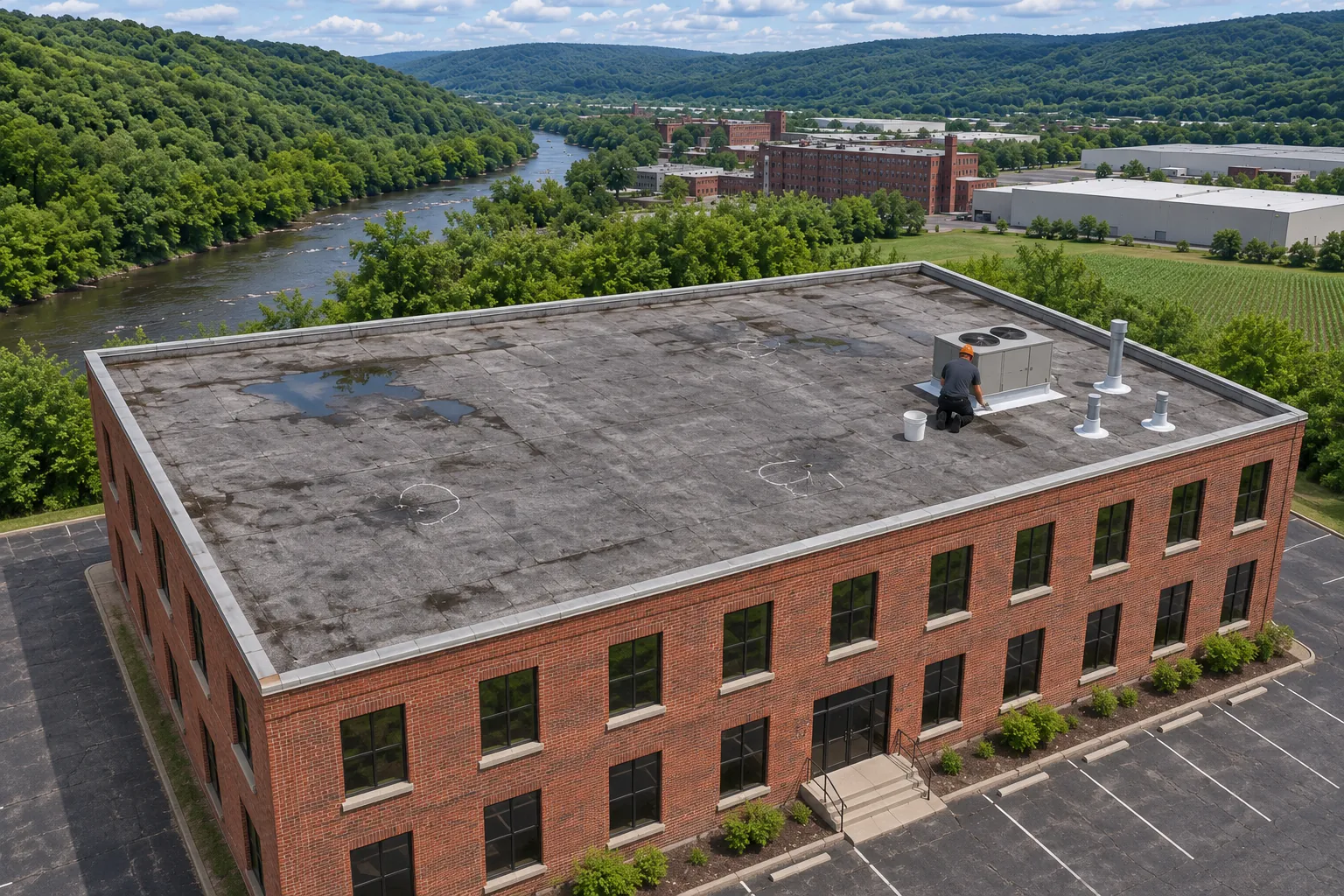
As a Scranton commercial roof leak repair contractor, we trace water from the stain back to its entry on the roof and repair that opening.
Scranton commercial roof leak repair starts with tracing. These columns show where the trace usually leads.
Leaks that hide their source tend to come from these four places on Scranton roofs.
Water near the top of a brick wall, sometimes floors below the roof.
Open coping joints and failed wall flashing let wind-driven rain behind the roof membrane. The caps and terminations get repaired.
Drips during a thaw at the edge of the building or over a drain.
Ice blocks gutters and drains, holding meltwater against seams. We inspect once access is safe and repair what the meltwater reached.
A ceiling stain under or near an HVAC unit after rain.
Curb flashing, unit panels, and condensate lines all drip. Each gets checked so the roofing is repaired only where it failed.
Leaks that appear only when rain is heavy and steady.
Partly blocked outlets back water up to seams that stay dry in light rain. Strainers and drain flashing come first.
Tracing matches what happens inside with what the roof shows outside.
A roof sketch, an interior drip map, and dates of each leak get matched to seams, drains, and equipment above.
Small samples between the stain and the suspected entry show the path water took through the insulation.
Masonry joints, cap fasteners, and flashing terminations get inspected along with the horizontal roof.
Leak dates matched to wind direction, snowmelt, or downpours narrow which detail lets water in.
Finding the real entry ends the cycle of patches placed in the wrong spot.
A repair placed above the drip can miss an entry several yards upslope.
Tracing finds the opening, and the repair goes there, with the wet path marked on the sketch.
Water entering at the wall top runs down behind the membrane and looks like a roof failure.
Caps get reattached and sealed, and wall flashing gets new terminations.
Meltwater held by ice reaches seams that rain never touches.
Drains and edges are cleared, and the seams the meltwater reached are repaired.
Insulation soaked along the path keeps dripping after the opening is closed.
Wet boards along the path are cut out and replaced so the dripping stops.
Write down the dates it leaks and the weather each time, then call. That record speeds up tracing on the roof.
Leak repair adds tracing steps before any roofing is opened.
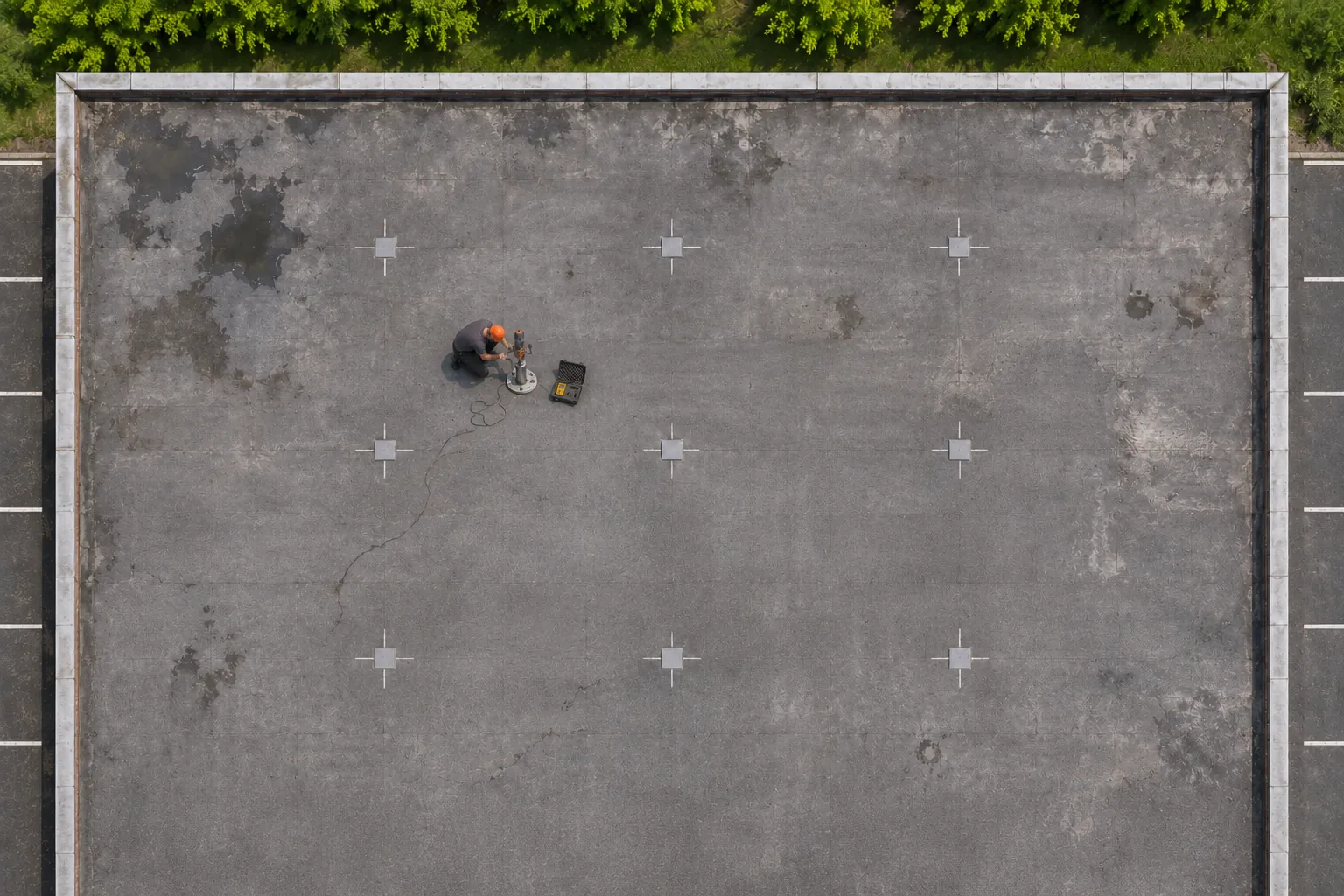
Every stain, bucket, and wet tile gets located on a floor plan with the dates it leaked.
Seams, drains, penetrations, and parapets upslope of each drip are checked in order.
Core cuts and probing show the path water took from the entry to the ceiling.
The opening gets fixed first, then wet insulation along the path is replaced.
Staff note any new drip so it can be checked against the repair map.
Once the entry is found, the fix usually falls under one of these repairs.
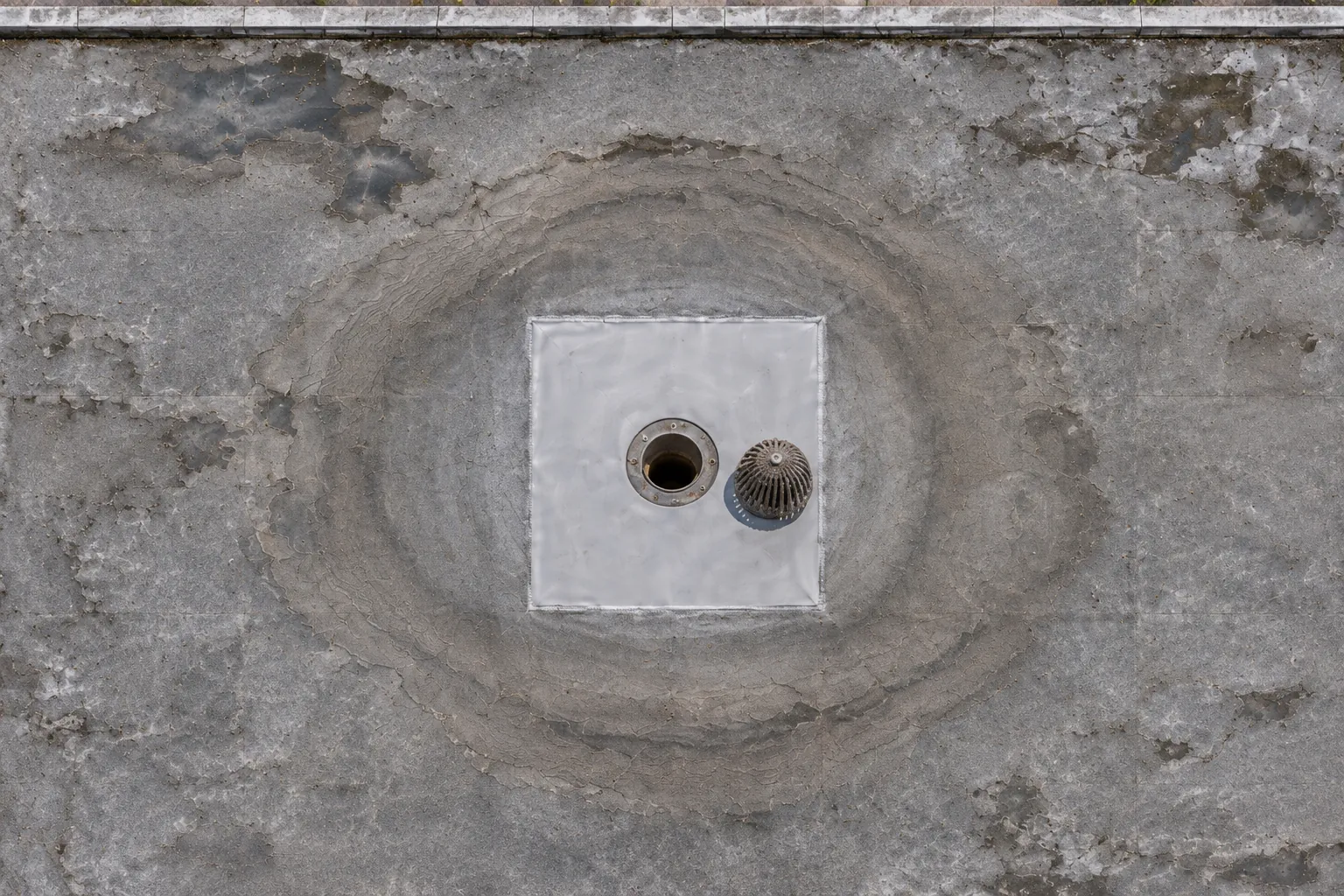
A traced entry at a split seam or a high drain becomes a membrane or drain repair on the low-slope field.
Where Water Gets In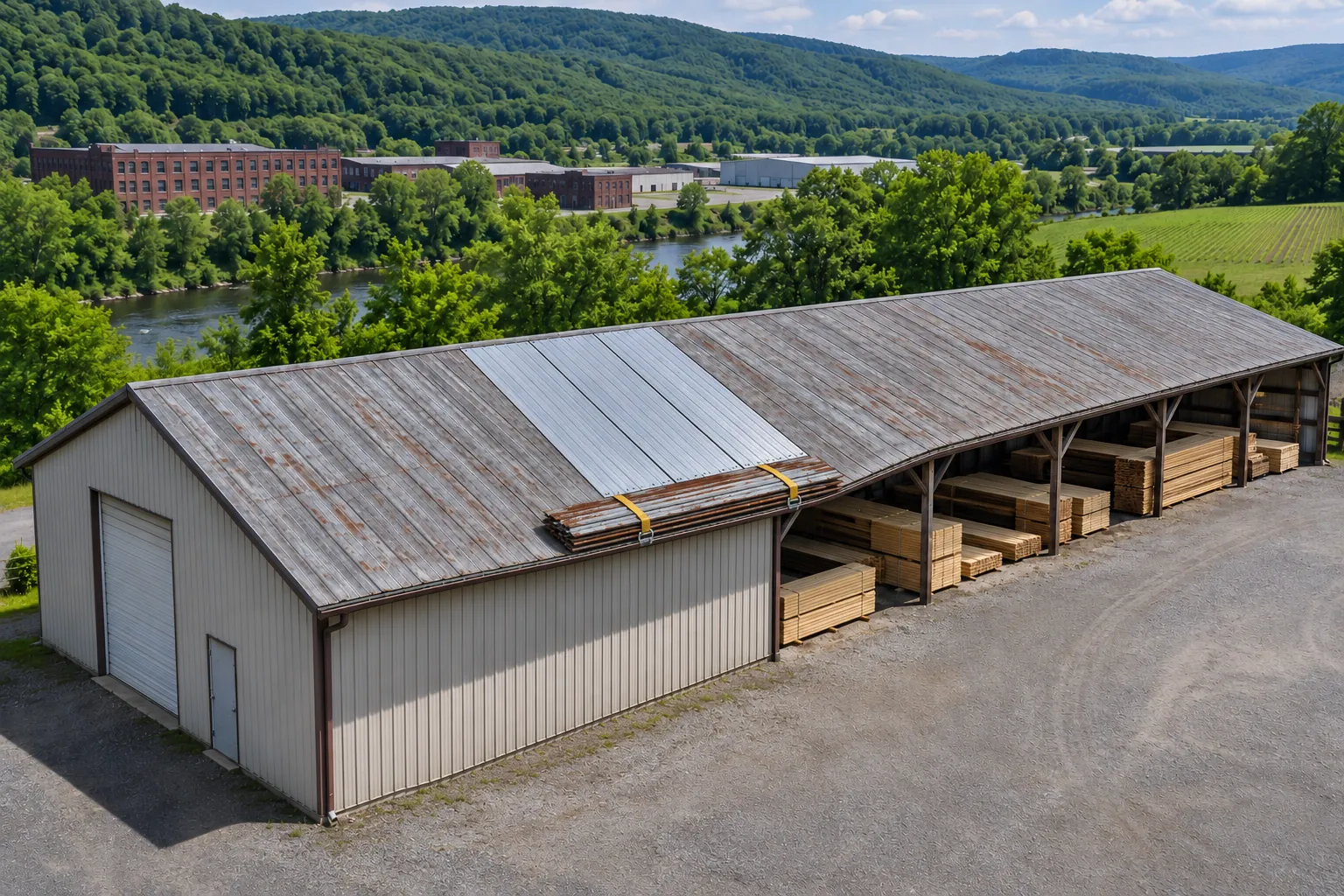
Water running along purlins often starts at a backed-out screw or a cracked boot on a metal panel roof.
Where Water Gets In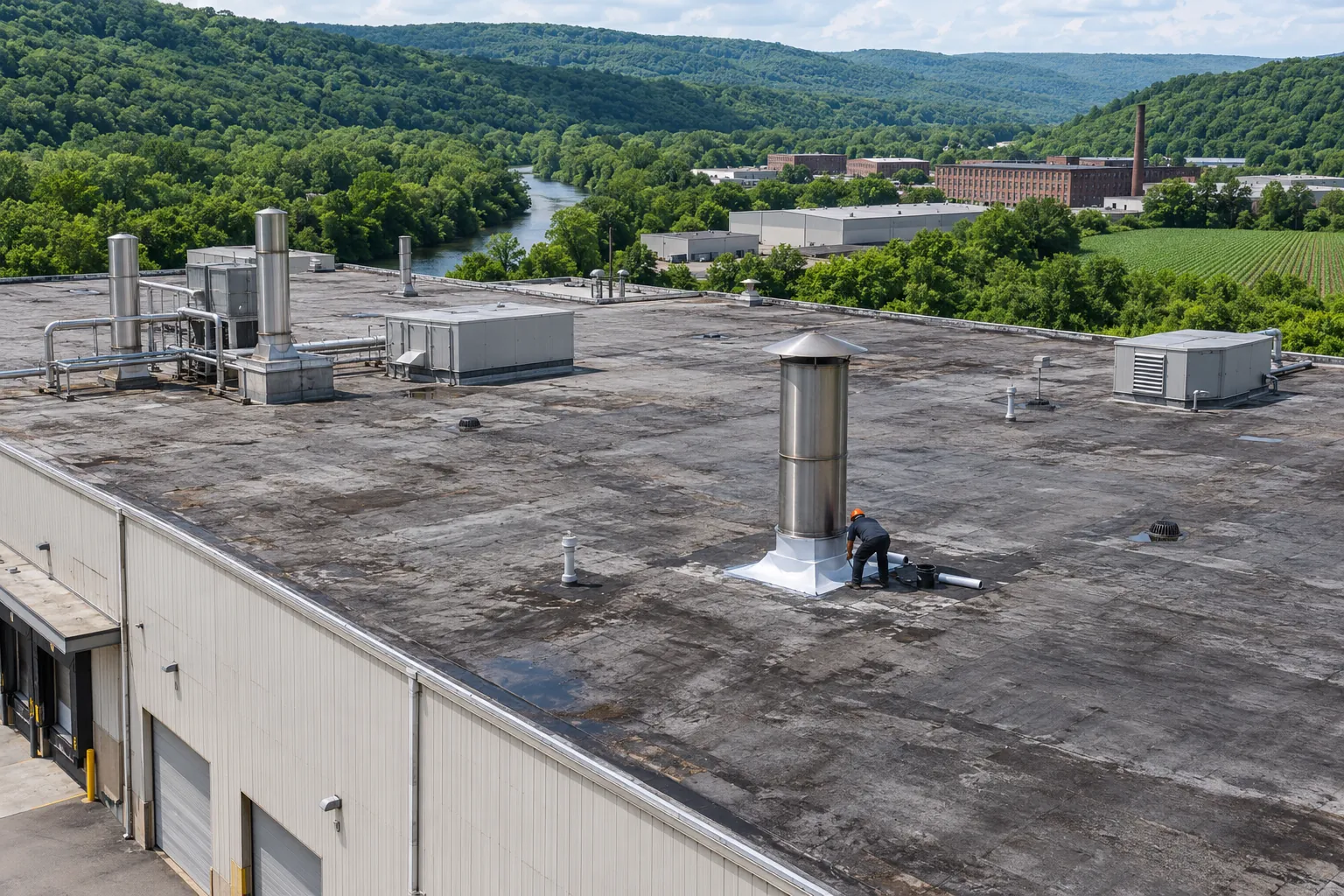
Leaks over production areas need repairs sequenced so the roof opening stays clear of work below.
Where Water Gets InA roof that leaks only in heavy rain still has a defect. Rising water or wind-driven rain reaches a weak seam, outlet, or wall connection that stays dry in light weather.
We compare storm conditions with drains, penetrations, and wall joints near the stain to find the detail that lets water in.
Yes. Open coping joints let water in above the roof flashing, and it can show up inside well below the roof. We inspect masonry, cap attachment, and flashing terminations alongside the roof field before naming the entry.
Ice holds meltwater against seams and flashing that ordinary rain drains past. We inspect drains, gutters, and edges once access is safe. Heavy wet snow also raises structural questions that need qualified assessment apart from the leak repair.
A rough roof sketch, a map of interior drips, and the dates each one leaked. With those, seams, equipment, and drains can be checked in the order most likely to explain the water path.
The stain marks where water dripped, which can be far downstream from where it entered. We check roof features and equipment near and upslope of the stain, then repair the confirmed entry.
Send the leak dates and where the stains are. We trace the entry on the roof and quote the repair.